
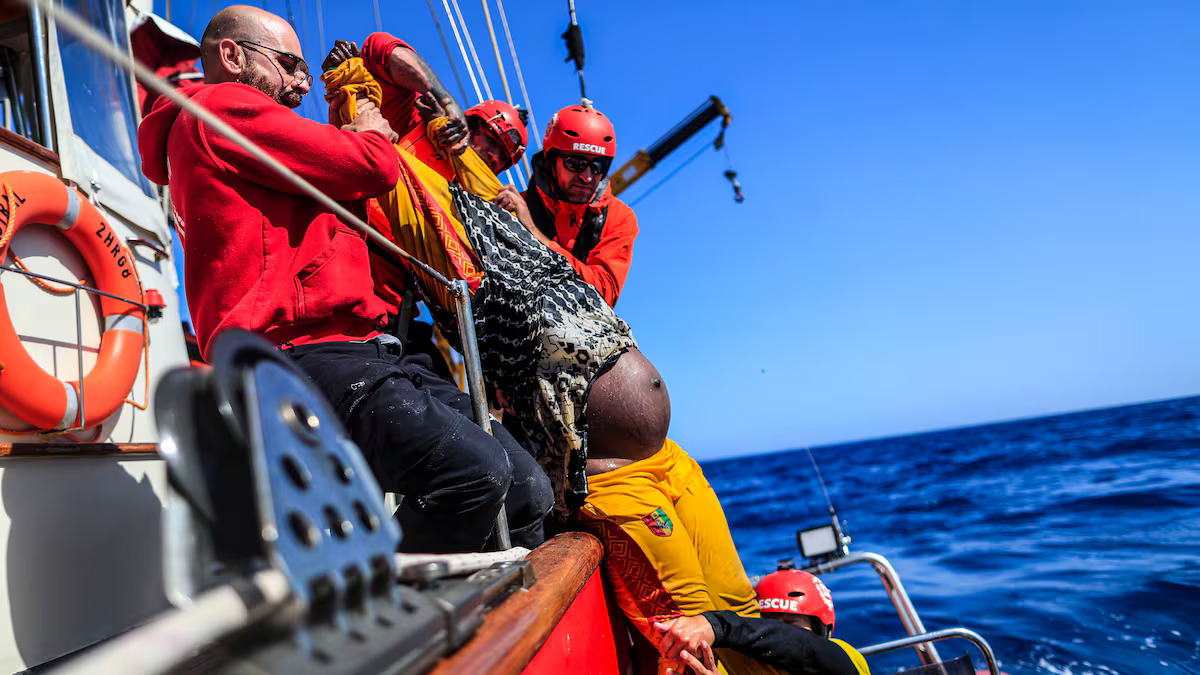
Rescue teams from the humanitarian organisations Sea-Eye and Pilotes Volontaires saved 47 migrants from an overcrowded wooden boat in the Central Mediterranean Sea on February 2. The operation involved the rescue ship Sea-Eye 5 and the surveillance aircraft Colibri 2, which works to locate boats in distress from the air.
According to a joint statement released on February 4, the migrants were found in dangerous conditions on a small wooden vessel that was not safe for such a journey. The rescue took place in the Maltese Search and Rescue zone after the crew of the Colibri 2 spotted the boat and alerted the Sea-Eye 5 team.
The group was later taken to the southern Italian port of Vibo Valentia, where they disembarked on February 4 after a 32-hour journey from the rescue location. Authorities in Italy assigned the port, even though it was far from where the rescue happened.
Sea-Eye explained that winter storms, worsened by Cyclone Harry, have made rescue work in the Mediterranean more difficult in recent weeks. Rough seas and strong winds have limited patrols, yet many migrants have still attempted the crossing. Aid groups such as Refugees in Libya and the Vatican fear that many more people may have gone missing during these storms.
Anna di Bari, a team leader with Sea-Eye, said winter rescues are especially challenging and highlighted the importance of cooperation between rescue groups to prevent deaths at sea. She stressed that coordination between sea and air teams was key to finding and saving the 47 people in time.
Medical staff from the organisation German Doctors, who were on board the Sea-Eye 5, reported that many of the rescued migrants were suffering from cold, dehydration, scabies, and fuel burns. Fuel burns can happen when seawater mixes with spilled diesel at the bottom of boats. Although their condition was described as stable, medical teams said the migrants needed to reach land quickly for proper care.
The long trip to the assigned port raised concerns among the rescue crew. Medical worker Esther Kurbach noted that the extended time at sea made some migrants experience sea sickness and prolonged exposure to cold weather, which weakened their overall health.
So far this year, 1,572 migrants have reached Italy by sea. In addition to the 47 rescued in this operation, another 47 migrants were recorded arriving the day before. Early data shows that many recent arrivals have come from Bangladesh, which accounts for the largest number of new arrivals so far.
The latest rescue once again highlights the ongoing risks faced by migrants attempting the Central Mediterranean route, one of the world’s most dangerous migration paths, and the continued role of humanitarian groups in preventing loss of life at sea.