
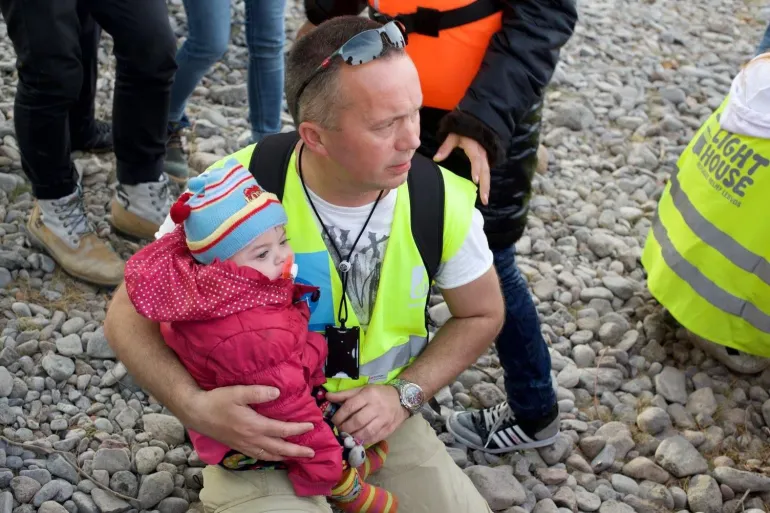
The head of a Norwegian migrant-focused NGO has been arrested in a case that is raising fresh concerns about the criminalization of humanitarian work linked to migration in Europe.
Tommy Olsen, founder of Aegean Boat Report, was detained by police in Troms, northern Norway, following a warrant issued by authorities in Greece. The arrest is connected to alleged migrant smuggling activities that date back to 2021.
According to the Hellenic Coast Guard, the investigation focuses on two separate incidents that took place in July and August 2021 near the islands of Kos and Farmakonisi in the eastern Aegean Sea. These areas are known hotspots for migrant crossings from Turkey into Greece.
Greek authorities allege that Olsen maintained telephone contact with individuals suspected of organizing migrant smuggling operations during the crossings. Investigators claim that this communication may have played a role in facilitating the movement of migrants and could link him to a broader criminal network involved in irregular migration.
The case does not involve only Olsen. A Greek activist and lawyer, who leads a human rights NGO, is also under investigation for possible involvement in the same incidents. Authorities have not yet released full details about the extent of their alleged role.
On its website, Aegean Boat Report says its mission is to monitor and report on migrant movements across the Aegean Sea. The organization regularly publishes information about boats in distress, migrant arrivals, and government responses, positioning itself as a watchdog on migration issues in the region.
Supporters of Olsen argue that such monitoring work is often misunderstood and should not be treated as criminal activity. They say NGOs play an important role in documenting human rights concerns and ensuring transparency in how migrants are treated during sea crossings.
However, Greek authorities have taken a stricter approach in recent years, increasing investigations into individuals and organizations suspected of aiding irregular migration. Officials argue that any form of coordination with smugglers, even indirect, could support illegal networks and must be addressed under the law.
The arrest highlights growing tensions across Europe between migration enforcement policies and humanitarian efforts. Several NGOs operating in border regions, especially in the Aegean Sea, have faced legal action or scrutiny over their involvement in rescue, monitoring, or reporting activities.
Legal experts note that the outcome of this case could have wider implications for how NGOs operate in migration hotspots. If proven, the allegations could strengthen calls for tighter regulation of organizations working near migration routes. On the other hand, rights groups warn that such actions could discourage humanitarian efforts and reduce oversight in areas where migrants face serious risks.
Authorities in Greece are expected to begin legal proceedings as they seek further cooperation from Norway. The case may also involve extradition discussions, depending on how the investigation develops.
For now, the arrest of Tommy Olsen has become another key example of the ongoing debate in Europe over migration control, human rights, and the role of civil society organizations.