
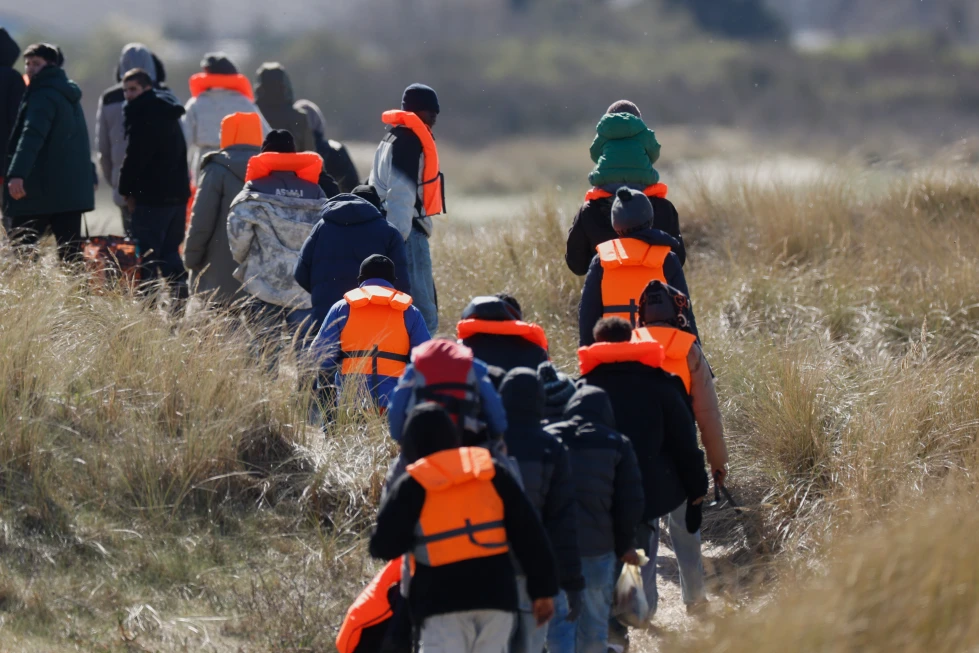
The European Union is taking stronger steps to control migration, with new policies that critics say resemble strategies used under Donald Trump. These changes focus on tracking, detaining, and deporting migrants more quickly, including sending some to “return hubs” outside Europe.
According to officials, the new measures are part of the Pact on Migration and Asylum, which is expected to take effect in June. Ursula von der Leyen said the reforms are designed to prevent a repeat of the 2015 migration crisis, when about one million people entered Europe seeking asylum.
A key part of the plan is the creation of migrant detention centers in countries outside the EU, especially in Africa. These centers would hold rejected asylum seekers before deportation. Several countries, including Germany, Austria, the Netherlands, Denmark, and Greece, are already exploring agreements with third countries.
Italy is seen as a leading example. Under Prime Minister Giorgia Meloni, Italy has set up migrant detention centers in Albania. The government has also introduced stricter rules, including stopping migrant boats at sea and speeding up deportations for those convicted of crimes.
Some European politicians and far-right groups have openly praised Trump’s immigration policies and are pushing for similar approaches in Europe. There have also been calls to create special police units focused on deporting migrants, similar to enforcement agencies in the United States.
However, human rights organizations are raising serious concerns. They report that illegal “pushbacks” — where migrants are forced back across borders without being allowed to apply for asylum — are increasing across Europe. In 2025 alone, more than 80,000 such cases were recorded, with an average of over 200 incidents daily.
Reports also describe harsh treatment of migrants, including violence, theft, and dangerous forced crossings. Critics say these actions violate international law, particularly the principle of non-refoulement, which prevents sending people back to places where they may face harm.
In addition, European authorities are increasing the use of surveillance tools such as drones, thermal cameras, and satellites to monitor migration routes. New rules may also allow more police raids in homes and public spaces, raising concerns about racial profiling and privacy violations.
Despite these developments, experts say Europe still maintains stronger legal protections for migrants compared to the United States. Human rights groups note that independent courts and legal systems in Europe continue to provide some level of protection.
Still, there is growing concern that the overall direction of policy is becoming stricter. Observers warn that while the systems may differ, the political push toward tougher migration control in Europe is increasingly similar to that seen in the U.S.