
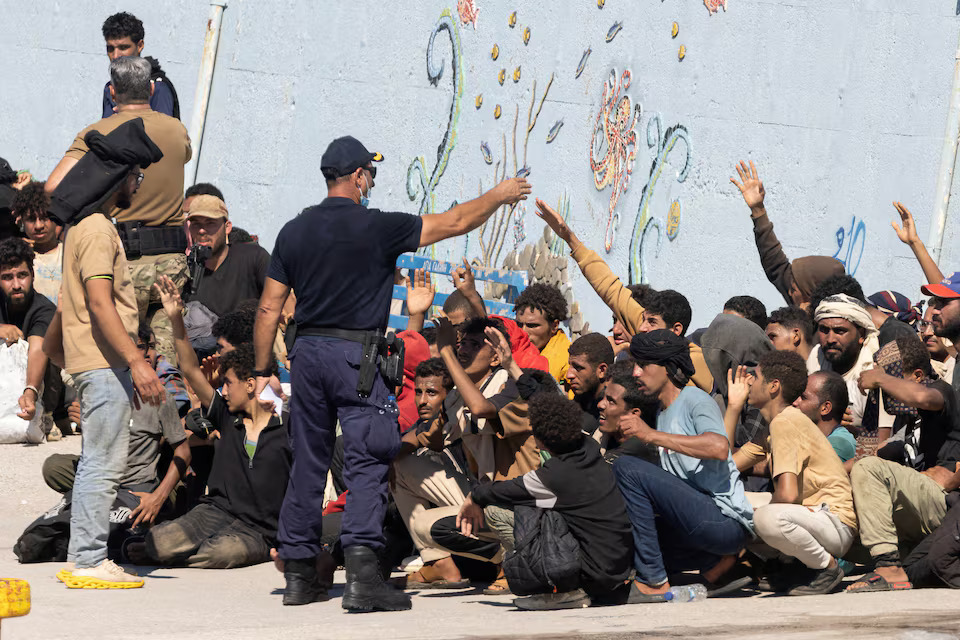
Greek authorities have rescued 145 migrants in just 24 hours south of the island of Gavdos, near Crete, according to the Hellenic Coast Guard. The UN Refugee Agency (UNHCR) reports that Crete and Gavdos together have received more than one-third of all migrant arrivals in Greece so far this year, highlighting the growing strain on the islands.
On Tuesday morning, a coast guard patrol boat supported by a Frontex drone rescued 36 migrants from a boat and transferred them to the port of Sfakia. A day earlier, a Frontex vessel and a passing ship saved 43 people from a dinghy located eight nautical miles south of Gavdos. Another 66 migrants were rescued from a separate dinghy 14 nautical miles away and were also taken safely to port.
This comes after a major incident last week when nearly 800 migrants arrived on Gavdos before being moved to reception centers in Crete. Officials say overcrowding and poor sanitary conditions are now creating a humanitarian challenge on the island, which lacks the capacity to handle such large numbers.
According to authorities, many of the migrants who arrived in mid-September had departed from Tobruk, a port city in eastern Libya near the Egyptian border. They traveled more than 300 kilometers by sea, often in unsafe fishing boats. Tobruk is outside the control of Libya’s internationally recognized government in Tripoli, making cooperation between Greece, the EU, and local authorities difficult.
In recent weeks, Greece and the EU have opened talks with General Khalifa Haftar, the de facto leader of eastern Libya, to discuss possible joint solutions. However, instability in Libya and competing international interests continue to complicate efforts to reduce irregular departures across the Mediterranean.
UNHCR data shows nearly 12,000 migrants have reached Crete so far in 2025, marking a sharp 300 percent rise compared to the same period last year. The dramatic increase has pushed Greece to take stricter measures, including suspending asylum applications for those arriving by sea. The suspension, initially set for three months until October 11, may now be extended further.
Alongside the suspension, the Greek government recently introduced a new law targeting rejected asylum seekers. The law states that anyone without legal status must either join voluntary return programs or face a minimum prison term of three years. The Ministry of Migration argues these measures are needed to protect public order and national security, though critics say the approach is harsh and risks violating human rights.
As more boats continue to arrive, Greece faces the challenge of balancing border security with humanitarian responsibility. For now, Crete and Gavdos remain at the center of the crisis, with local communities, rescue agencies, and European authorities struggling to respond to the fast-rising number of arrivals.