
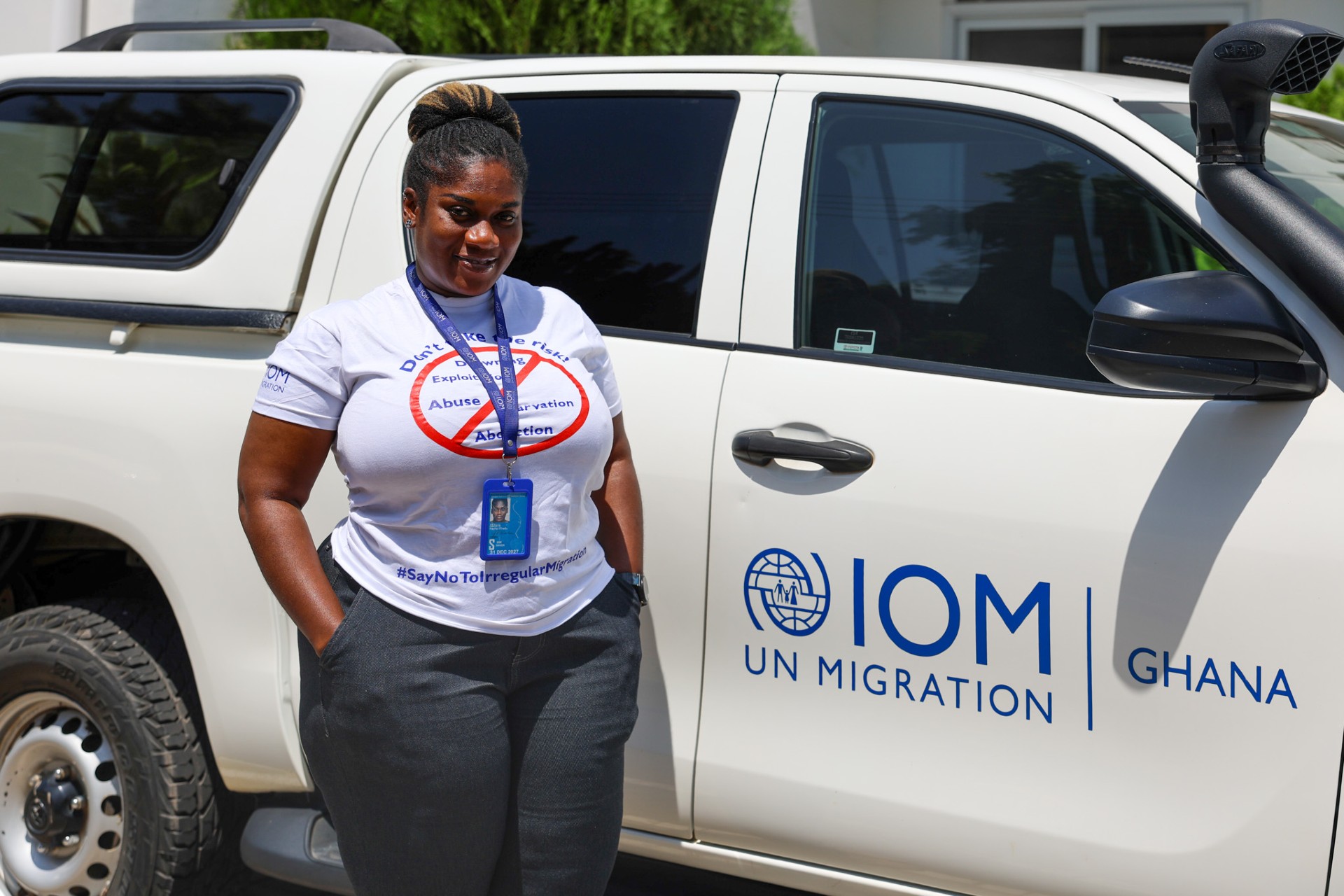
In the busy streets of Accra, where traffic can delay even the shortest trips, one woman is playing a vital role in keeping migrant health services running smoothly.
Rachel, a driver with the International Organization for Migration, is more than just someone behind the wheel. She ensures that medical samples collected from migrants are delivered on time to laboratories across the city, supporting critical health checks that allow migrants to travel safely.
“People sometimes think my job is just driving,” Rachel explains. “But every trip I make helps someone get the healthcare they need.”
Her journey into this role began in Ghana’s Eastern Region, inspired by her father, who worked as a professional driver at a company in Tema. Watching him sparked her passion, even though driving is often seen as a male-dominated job.
Today, Rachel is the only female driver in her unit, and her work is central to daily operations. Each morning, she collects medical samples from the Migration Health Assessment Centre and transports them carefully to different labs, ensuring they arrive within strict timelines for accurate testing.
These tasks may seem routine, but they carry great importance. For many migrants, health screening is a key step in their journey—whether they are relocating, reuniting with family, or preparing for travel. Delays can affect their future plans.
“I may not meet the migrants, but I know my work matters,” she says. “Every delivery supports someone’s future.”
Rachel’s role also extends beyond transporting samples. During medical escorts and voluntary return operations, she helps with logistics and supports migrants, especially women and children, during stressful transitions.
In these moments, her presence as a woman can offer comfort. Simple gestures like helping with luggage or speaking kindly can make a big difference to migrants facing uncertainty.
Her dedication has earned her respect among colleagues, reinforcing her belief that ability—not gender—defines success. Alongside her job, Rachel is also improving her education, balancing studies with long working hours.
She also makes time for self-care, including exercise, music, and spending time with friends, helping her stay energized for the demands of her role.
Rachel’s story highlights how migrant health services depend on many people working behind the scenes. From healthcare workers to drivers, each role contributes to a system that ensures migrants receive proper care and dignity.
“Health services are important for everyone,” Rachel says. “Migrants deserve the same care and respect as anyone else.”
Her daily journeys across the city show that access to healthcare is not just about policies or hospitals—it is also about the people who keep the system moving every day.