
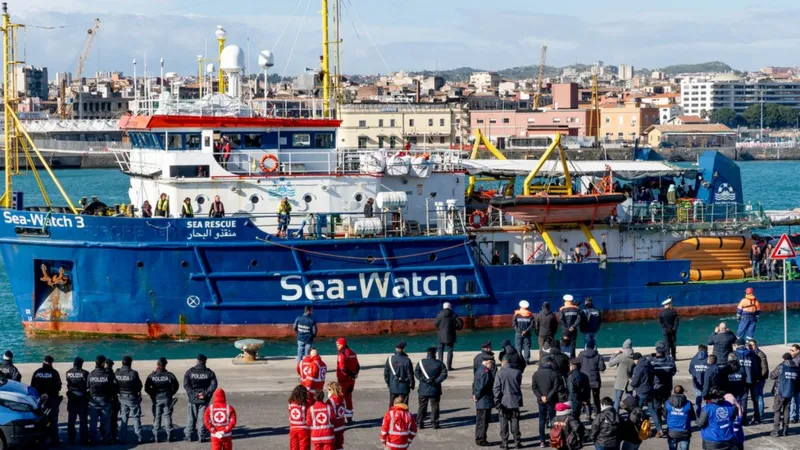
The rescue vessel Sea-Watch 5 has finally disembarked all rescued migrants in Trapani, Sicily, after a tense standoff with Italy over where the ship should dock.
The ship, operated by Sea-Watch, had rescued 93 migrants in distress in the Mediterranean Sea on March 15. However, it was forced to wait for days after Italian authorities initially instructed it to head to a distant port in northern Italy.
According to the organization, the remaining 57 migrants were allowed to disembark on March 18 after the crew declared an emergency due to serious health concerns on board. Earlier, 36 people, including minors and vulnerable individuals, had already been evacuated because of urgent needs.
The dispute began when authorities directed the vessel to sail to Marina di Carrara, a port more than 1,100 kilometres away. The crew refused, arguing that the long journey would put the health and safety of migrants at risk.
Eventually, permission was granted for the ship to dock in Trapani, although officials said the move went against the country’s migration rules under the Piantedosi Decree, which regulates NGO rescue missions.
The situation also attracted attention in Germany, where human rights commissioner Lars Castellucci called for a quick solution. He stressed that international maritime law requires rescued individuals to be taken to the nearest safe port.
Health conditions on board were reported to be worsening during the delay. Migrants suffered from exhaustion, seasickness, respiratory infections, and fuel burns. Aid workers warned that without immediate care, these conditions could lead to serious complications. Among those rescued was also a pregnant woman, raising further safety concerns.
The central Mediterranean remains one of the world’s most dangerous migration routes. Many migrants depart from countries like Libya and Tunisia in overcrowded and unsafe boats, hoping to reach Europe.
Data from the International Organization for Migration shows that hundreds of people have already died or gone missing along this route in 2026. Humanitarian groups say the real number could be even higher.
Critics have also raised concerns about Italy’s policy of assigning distant ports to rescue vessels. They argue that such measures delay assistance and reduce the ability of NGOs to respond to other emergencies at sea.
Experts warn that stricter border controls and limited legal migration routes are pushing migrants to take longer and more dangerous journeys, increasing the risks they face.
Humanitarian organizations continue to call for better coordination, safer migration pathways, and stronger protection for people attempting the dangerous Mediterranean crossing.