
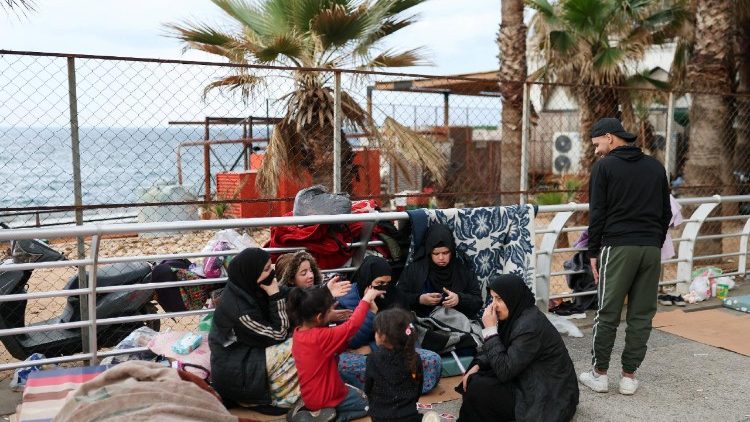
As violence intensifies across Lebanon, hundreds of thousands of people have been displaced, prompting urgent humanitarian action to meet growing needs for shelter, food, and psychosocial support.
The escalation follows continued strikes by the United States and Israel on Iran, with more than 1,000 reported dead and many more wounded. The conflict has spilled across borders, with intensified Israeli attacks on Lebanon and retaliatory Iranian strikes in the Gulf, further destabilizing the region.
Father Daniel Corrou, regional director for the Middle East and North Africa at the Jesuit Refugee Service (JRS), described a rapidly deteriorating humanitarian situation in and around Beirut. Large numbers of residents have fled southern Lebanon and the southern suburbs of Beirut, seeking safety in the capital. According to Father Corrou, several hundred thousand people are believed to have been displaced, though official figures are still being verified.
In response, Lebanese authorities have converted more than 300 public schools into temporary shelters. However, these facilities are already at full capacity, leaving many families struggling to find secure accommodation.
While government shelters are officially open to all, migrant workers and non-Lebanese residents have reportedly faced difficulties accessing assistance. Father Corrou noted that, in practice, many migrant workers are being turned away despite no formal policy excluding them.
To address this gap, JRS and local Church communities have reopened shelters first established during the 2024 conflict. These centers are currently hosting migrants and refugees from countries including the Philippines, Ethiopia, Sudan, Eritrea, Yemen, Sierra Leone, and Nigeria.
Typically focused on education and long-term integration programs, JRS has shifted its operations to emergency response. Schools have closed due to the violence, forcing the suspension of education initiatives, while staff have been reassigned to support migrant shelters. Mental health and psychosocial support programs continue, as trauma and uncertainty weigh heavily on displaced families.
The most urgent needs remain safe shelter, sanitation facilities, food, and psychological support. Despite the uncertainty, many displaced families remain hopeful that they will eventually return home, though safety remains their primary concern.
Father Corrou also welcomed the recent appeal for peace by Pope Leo, saying the message was warmly received by local communities. He urged international leaders to prioritize diplomacy and renewed negotiations, emphasizing that people across the region need peace and stability to care for their families and live together in the rich religious and cultural diversity that characterizes the Middle East.