
The Federal Government of Nigeria has repatriated more than 700 stranded Nigerians from the Niger Republic in a major evacuation effort, as migration challenges across the region continue to grow.
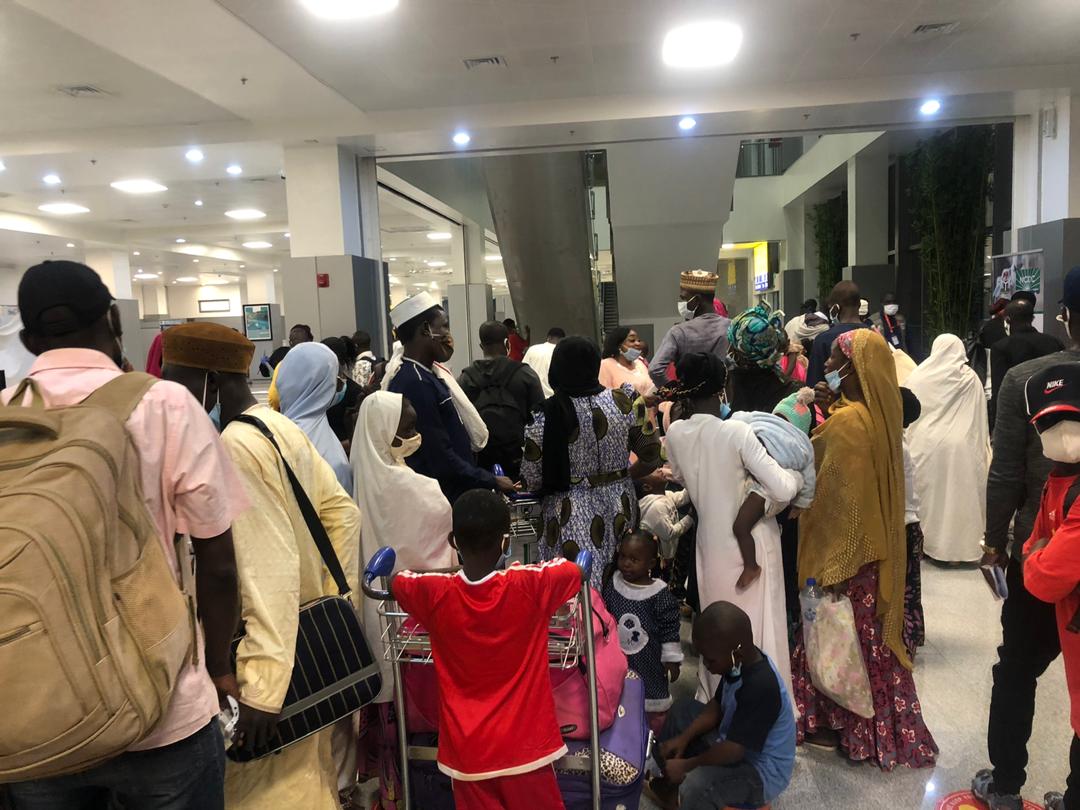
A total of 708 returnees were brought back to Nigeria and received in Kano, where they are currently undergoing documentation and receiving humanitarian support. Officials from the National Emergency Management Agency confirmed that the operation is one of the largest recent repatriations from Niger.
The evacuation was carried out through strong coordination between government agencies, including the Ministry of Foreign Affairs Nigeria and NEMA. The returnees arrived at the Malam Aminu Kano International Airport in a convoy of 12 buses at about 4:08 p.m.
Authorities said the group includes Nigerians from several states such as Kano, Katsina, Borno, Kaduna, and Kogi. Many of them are women and children, highlighting the vulnerability of those affected. Upon arrival, officials immediately began profiling them to confirm identities and plan their safe return to their home states.
Government agencies, alongside humanitarian partners, are providing urgent support to the returnees. This includes temporary shelter, food, medical care, and essential items like blankets, mosquito nets, and hygiene kits. Medical teams are also treating those in need, while serious cases are being referred to hospitals.
The repatriation effort is part of broader plans to support reintegration and reduce the risks linked to irregular migration. Authorities say helping returnees settle back into society is key to preventing them from attempting dangerous journeys again.
Many of the returnees shared difficult experiences during their time in Niger. Some spoke of violence, displacement, and losing their belongings, while others described harsh economic conditions that made survival difficult. These stories show the dangers migrants often face when using informal routes across West and North Africa.
The development also reflects a growing trend of migration among Nigerians. According to the International Organization for Migration, over 60,000 Nigerians have returned home since 2017 through assisted return programmes. Surveys suggest that many Nigerians are still considering leaving the country due to economic hardship and limited job opportunities.
Experts say the situation points to deeper structural issues, including unemployment and income challenges. While emergency evacuations like this provide immediate relief, long-term solutions will require stronger economic policies, job creation, and better social support systems.
The Nigerian government is also expected to strengthen cooperation with neighboring countries like Niger to improve migrant safety and better manage cross-border movement.
Overall, the return of over 700 Nigerians highlights both the success of emergency response efforts and the ongoing migration pressures facing the country. While the immediate needs of returnees are being addressed, the larger challenge remains creating conditions at home that reduce the need for risky migration journeys.