
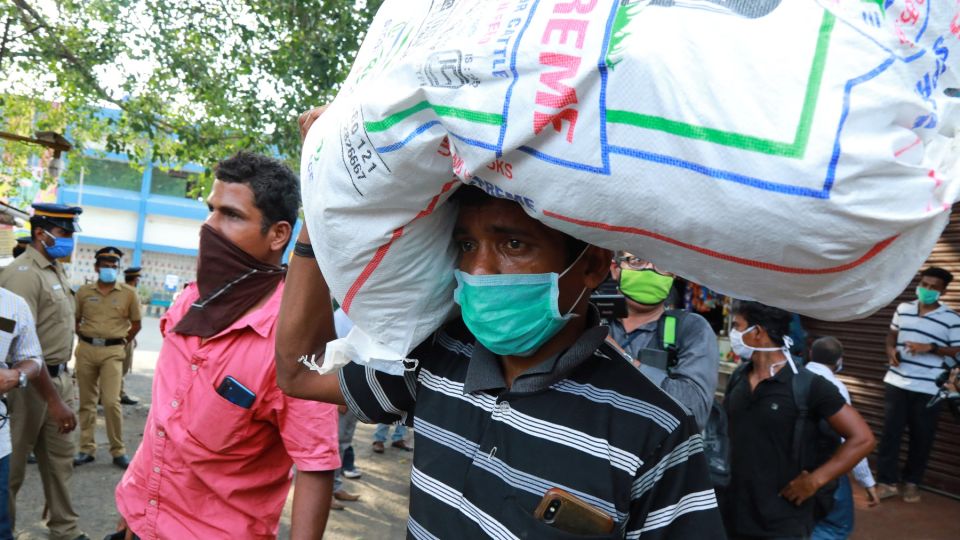
The government of Odisha has issued 2,608 licences covering more than 167,000 migrant workers over the past three years, according to data presented in the state assembly.
Labour and Employees State Insurance Minister Ganesh Ram Singhkhuntia revealed the figures while responding to a question raised by Pradip Kumar Dishari, a lawmaker representing the Lanjigarh constituency.
The licences were issued under the Inter-State Migrant Workmen (Regulation of Employment and Conditions of Service) Act 1979, which regulates the employment and working conditions of migrant labourers moving between states for work.
According to the minister, the highest number of licences was issued in 2025, when 1,465 licences were granted for 92,176 workers. In 2024, authorities issued 1,037 licences covering 70,142 migrant workers, while in 2026 so far, 106 licences have been issued for 5,062 workers.
The state government has also established a high-level task force to address challenges faced by migrant workers and reduce cases of distress migration. The task force is chaired by Deputy Chief Minister Kanak Vardhan Singh Deo.
Officials say the task force has already held several meetings with different government departments to develop strategies that improve livelihoods and reduce the need for people to migrate under difficult circumstances.
Among the measures introduced are stronger enforcement of labour laws, improved registration of migrant families and labour contractors, and better implementation of both central and state welfare schemes.
The government is also promoting employment opportunities through the Viksit Bharat Guarantee for Rozgar and Ajeevika Mission Gramin. The initiative includes projects such as livestock shelters, land development, horticulture activities, irrigation facilities, and construction of ponds and wells to support rural livelihoods.
Authorities say these programs aim to create stable income opportunities within local communities, allowing workers to remain in their home regions instead of migrating in search of employment.
State officials added that strengthening agriculture, fisheries, and animal resource sectors through subsidies and development programs could help provide sustainable livelihoods and reduce distress migration in the future.