
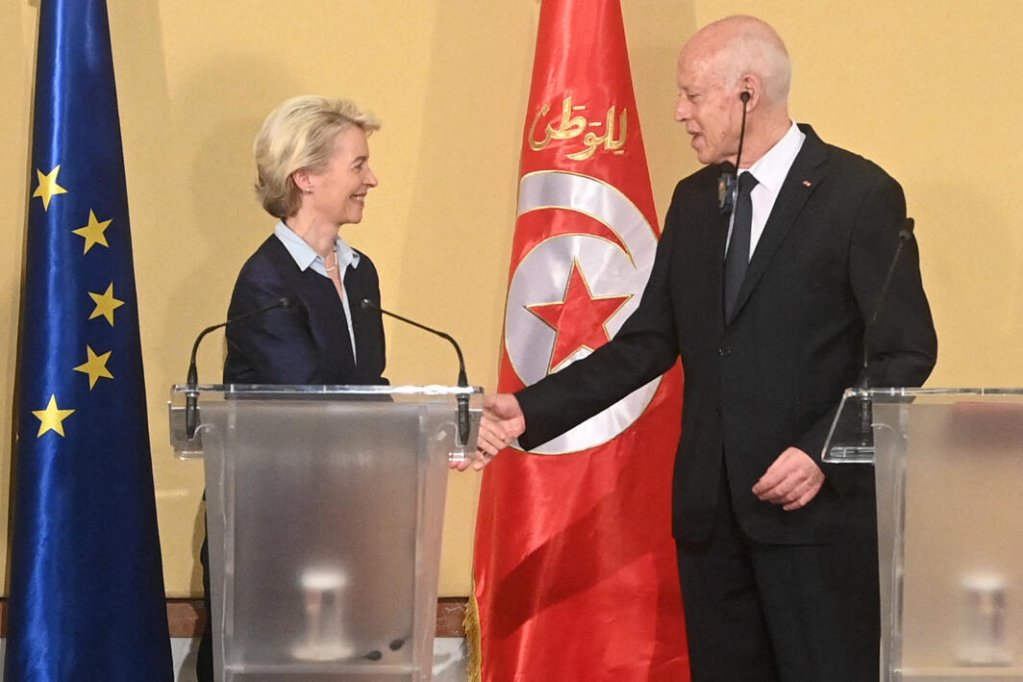
Tunisia is calling for a major revision of its migration agreement with the European Union, as President Kaïs Saïed argues that the current deal is unfair and overly focused on migration control rather than a true economic partnership.
The demand comes amid growing political and economic pressure inside Tunisia, alongside increasing criticism from human rights groups over how migrants are being treated under the agreement.
At the center of the issue is the 2023 partnership deal, where the EU pledged over €1 billion in financial aid, investment, and border management support to Tunisia. In return, Tunisia agreed to tighten control over irregular migration routes, especially departures across the Mediterranean to Europe.
However, Tunisian authorities now say the agreement has created an imbalance. Speaking during a call with Emmanuel Macron, Saïed insisted the deal must be made “more balanced, fair and equitable,” reflecting Tunisia’s growing frustration with what it sees as a one-sided arrangement.
Tunisia’s government believes it has been treated more like a buffer zone to stop migrants rather than a true economic partner. While the EU remains Tunisia’s largest trading partner, taking about 70 percent of its exports, officials argue that investment and development support have not matched this level of dependence.
Migration has become a key bargaining tool in this dispute. The EU credits the deal with reducing irregular arrivals from Tunisia to Italy by around 80 percent. But critics say this success has come at a high human cost.
Reports from groups like Amnesty International and the International Commission of Jurists claim migrants in Tunisia face serious abuses, including forced expulsions, violence, and poor living conditions. There are also concerns about racial discrimination, particularly against migrants from sub-Saharan Africa.
At the same time, Tunisia has been tightening control over civil society. Several migrant-rights organizations have been suspended, and activists have faced arrests. One notable case is Saadia Mosbah, who was sentenced to prison in a move critics say is politically motivated.
Observers say this crackdown is part of a wider effort to silence criticism and control the narrative around migration. Authorities have also reduced transparency, with fewer official reports on migrant interceptions and deaths, making it harder to track what is happening on the ground.
The humanitarian situation in the Mediterranean is also worsening. According to the International Organization for Migration, hundreds of migrants have already died or gone missing in 2026, with many cases likely unreported due to limited data.
If negotiations move forward, Tunisia is expected to push for several key changes:
- More balanced economic investment and development support
- Greater EU responsibility for migrant returns and asylum processing
- Increased transparency in migration agreements
- Better protection and recognition for Tunisians living abroad
For the EU, the situation presents a difficult challenge. While Tunisia is a key partner in controlling migration, critics warn that continuing the current approach could damage Europe’s commitment to human rights.
As discussions continue, the outcome of this potential renegotiation could reshape migration cooperation between Europe and North Africa—and determine whether future agreements focus more on shared responsibility or border control alone.