
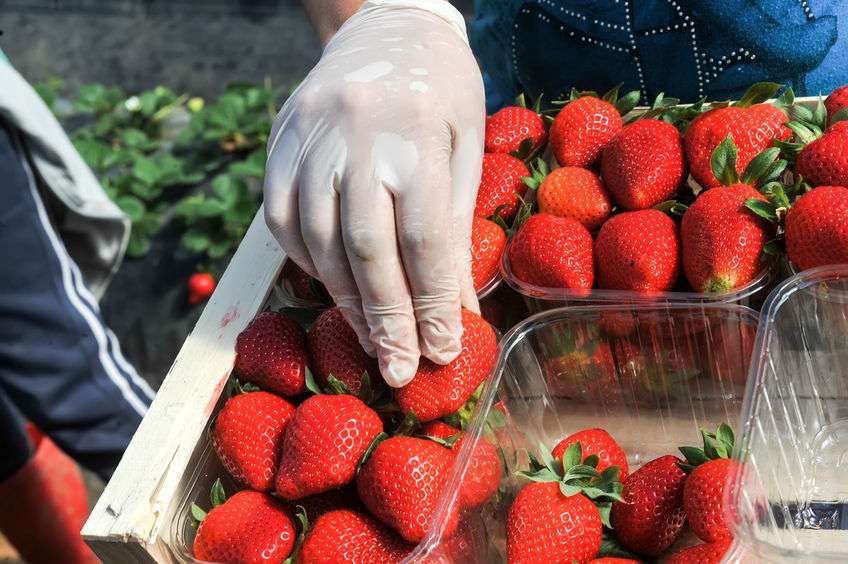
The agri-food industry recorded the highest number of migrant worker abuse cases of any sector in 2025, with more than 200 incidents exposing widespread exploitation across global food supply chains — including cases reported in the United Kingdom.
A total of 237 cases were documented in agri-food supply chains during the year, representing 32% of all incidents tracked in a global database monitoring migrant worker abuse. The United States reported the highest number of cases at 31, followed by Canada with 20, and the UK with 18 cases involving migrant farmworkers.
The figures were compiled by the Business & Human Rights Resource Centre, which monitors labour exploitation affecting migrant workers worldwide.
Of the 237 cases, 179 involved workers in agriculture and fishing. Another 53 were recorded in food processing and packing, while nine cases were linked to food distribution and retail.
Migrant labour remained critical to global food production throughout 2025, with workers planting, harvesting, and packing produce to address labour shortages and maintain food security. However, the report found that many were subjected to unacceptable working conditions.
Fruit and vegetable harvesting accounted for 29 cases, while livestock farming was linked to 13 incidents. Some cases were connected to supply chains serving multinational retailers such as Costco, Walmart, and Hannaford, as well as restaurant giant McDonald’s.
Wage theft was the most frequently reported form of abuse, appearing in 57 cases. This included unlawful salary deductions, contracts misrepresenting working hours, and payments below minimum wage thresholds. Health and safety violations were cited in 46 cases, with workers exposed to extreme heat and hazardous chemicals.
Living conditions also raised serious concerns. Poor accommodation featured in 42 cases, with farmworkers disproportionately affected, accounting for 28% of such reports compared with 15% across the wider database.
Catriona Fraser, a migrant workers researcher at the Business & Human Rights Resource Centre, said the findings reflect growing global risks facing migrant labour. She pointed to conflict, climate pressures, and political hostility toward migrants as factors increasing vulnerability across migration corridors.
Fraser argued that the abuses stem from structural issues within global supply chains, including subcontracting practices, weak oversight, and purchasing models that push risks onto workers. She called on multinational corporations to move beyond superficial compliance measures and conduct meaningful human rights due diligence focused on migrant workers’ experiences.
The report highlights both the essential role migrant workers play in sustaining food production and the mounting scrutiny facing companies over labour conditions in global and UK agricultural supply chains.