
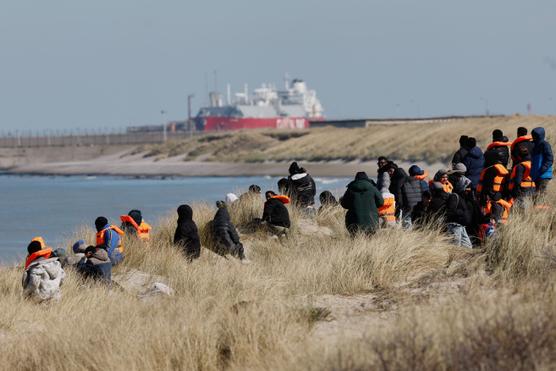
The United Kingdom government has said it wants better “value for money” as it works to renew a key migration agreement with France aimed at stopping small boat crossings across the English Channel.
The current deal, signed in March 2023, saw the UK agree to pay £476 million over three years to support French efforts in tackling irregular migration. The funding was used to boost border security, including more patrol officers and plans for a migrant detention center along the French coast.
Now, as the agreement nears its expiration, Prime Minister Keir Starmer’s government says it wants a stronger and more effective arrangement. A spokesperson for the prime minister explained that ongoing discussions with France are focused on ensuring any new deal delivers real results and long-term impact.
According to the UK government, both countries remain committed to stopping dangerous Channel crossings, which have continued to rise despite previous measures. In 2025 alone, nearly 42,000 migrants arrived on the southern coast of England, marking one of the highest yearly totals on record.
The issue has become a major political challenge for the UK government. Since taking office in July 2024, Starmer and Home Secretary Shabana Mahmood have faced increasing pressure to reduce migration numbers. This pressure has grown as the Reform UK party gains popularity in national opinion polls with strong anti-immigration messaging.
At the same time, the government’s tougher stance on migration has sparked criticism. Recent decisions to reduce protections for some refugees and cut support for asylum seekers have raised concerns among charities and even some members of the ruling Labour Party, who fear losing support from more progressive voters.
Alongside the main deal with France, both countries also launched a separate “one-in, one-out” pilot scheme. Under this system, migrants arriving in the UK by small boats can be returned to France, while others are accepted into the UK through legal routes. Early figures show a relatively small number of transfers so far, raising questions about the overall effectiveness of the approach.
As negotiations continue, the UK government is expected to push for more flexible and innovative strategies to tackle migrant crossings. However, with numbers still high and political pressure increasing, the success of the new deal could play a major role in shaping the country’s migration policy in the coming years.