
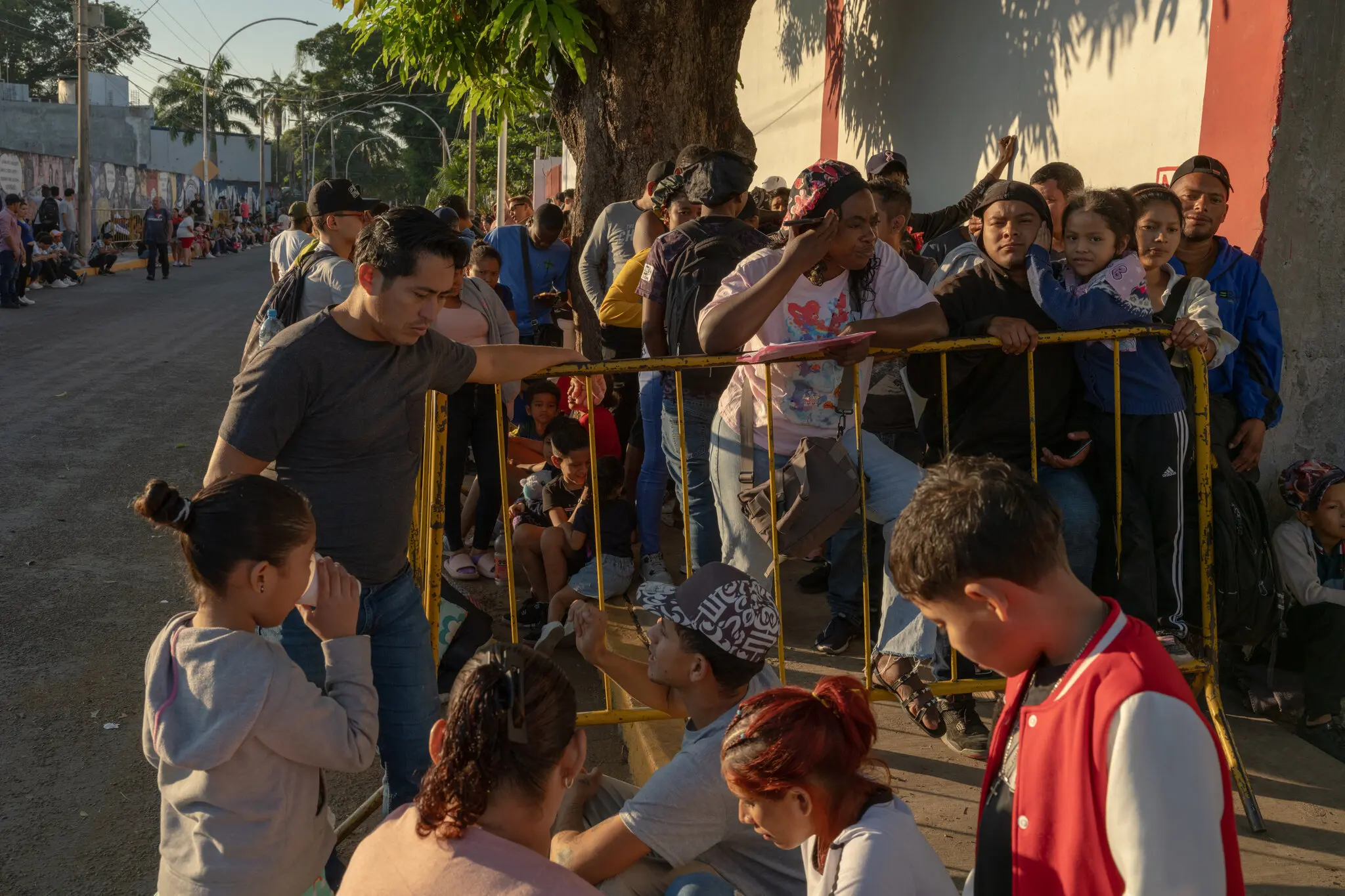
The Supreme Court of the United States is currently examining a controversial migrant policy from the administration of Donald Trump that allowed officials to turn away asylum seekers at the U.S.-Mexico border.
The policy, known as “metering,” permitted officers from Customs and Border Protection to stop migrants on the Mexican side of the border and deny them the chance to apply for asylum before entering the United States.
Although the policy has not been in use since 2021, the Trump administration is seeking a legal ruling to confirm that it was lawful, which could allow it to be reintroduced in the future.
At the center of the case is the interpretation of U.S. immigration law, specifically whether migrants must be physically inside the United States before they can apply for asylum, or if presenting themselves at a border crossing is enough.
Under the Immigration and Nationality Act, individuals who are “physically present” in the U.S. or who “arrive” in the country have the right to seek asylum. However, the meaning of “arrive” is now being debated in court.
A lower appeals court ruled in 2024 that migrants at official ports of entry should be allowed to apply for asylum regardless of which side of the border they are standing on. The Trump administration is now asking the Supreme Court to overturn that decision.
Government lawyers argue that a person only “arrives” in the United States once they have physically crossed the border. Solicitor General John Sauer stated that migrants standing in Mexico do not meet that requirement.
On the other hand, migrant advocacy groups, including Al Otro Lado, argue that the policy was illegal and put vulnerable people at risk. They say U.S. law requires authorities to process asylum seekers who present themselves at official entry points.
The group also highlighted the human impact of the policy, stating that many migrants—including families and children—were left stranded in dangerous border areas where they faced violence, kidnapping, and other threats.
The case is one of several immigration-related issues the Supreme Court is reviewing this year. Other cases include challenges to birthright citizenship policies and efforts to end deportation protections for certain migrant groups.
The outcome of this case could have significant implications for U.S. immigration policy, particularly in determining how asylum seekers are treated at the border and what rights they have when seeking protection.