
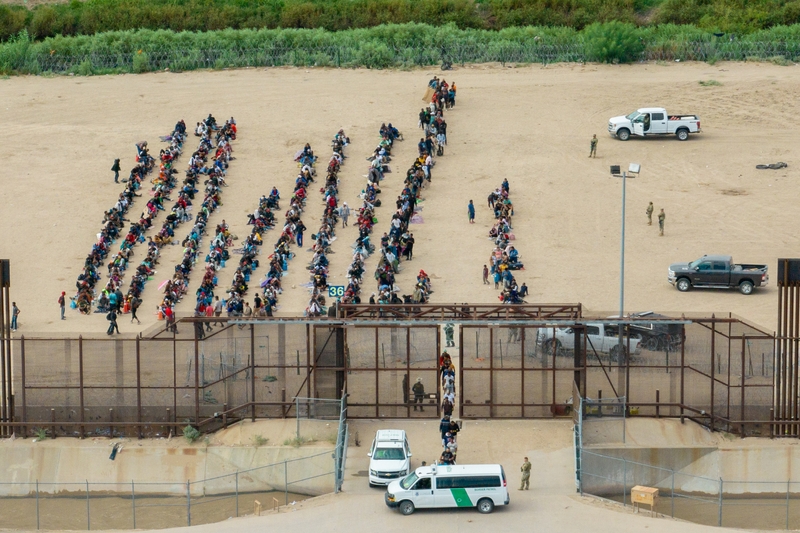
The Supreme Court of the United States is set to hear a landmark case that could reshape how asylum seekers access protection at the U.S.-Mexico border. The case will determine whether migrants waiting on the Mexican side can legally apply for asylum when they present themselves at official U.S. ports of entry.
The legal dispute dates back to a controversial immigration policy introduced during Donald Trump’s administration. Known as the “metering” or “turn back” policy, it allowed officers from Customs and Border Protection to refuse entry to asylum seekers at border crossings, effectively forcing them to wait in Mexico rather than have their claims processed immediately.
Under this policy, migrants were told they could only apply for asylum if they were physically inside the United States. This interpretation led to long waiting lists at border crossings, with many migrants stranded in difficult and sometimes dangerous conditions. A 2020 report by the Department of Homeland Security found that up to 680 migrants per day were turned away at certain points during the policy’s implementation.
Lower courts later ruled against the policy, stating that it violated administrative procedures and the legal obligation of U.S. authorities to inspect and process individuals seeking asylum at ports of entry. Judges argued that migrants do not need to be fully inside the country before requesting protection, especially when they present themselves lawfully at official crossings.
However, the case has now reached the Supreme Court after government lawyers challenged those rulings. U.S. Solicitor General D. John Sauer argued that, in legal terms, a person only “arrives” in the United States once they have physically crossed the border. According to this view, migrants standing on the Mexican side do not yet qualify to apply for asylum under U.S. law.
The government also claims that lower-court decisions limit the executive branch’s ability to manage migration flows and respond to surges at the southern border. Officials argue that turning migrants away can help prevent overcrowding and maintain order at busy entry points.
On the other side, migrant advocacy groups, including Al Otro Lado, strongly oppose this interpretation. They argue that denying access to asylum procedures puts vulnerable people at risk, especially those fleeing violence, persecution, or instability in their home countries.
Advocates also stress that asylum law is designed to protect individuals at the moment they seek help, not after they successfully enter a country. They warn that allowing border officials to reject asylum seekers could create a dangerous precedent and weaken international protection standards.
Another key issue in the case is that the policy in question is no longer active. It ended during the Joe Biden administration in 2021. Lawyers representing asylum seekers argue that the case has little immediate impact, but could still influence future policies if similar measures are reintroduced.
Religious and civil society organizations have also weighed in. Leaders such as Liz Theoharis of the Kairos Center have emphasized the moral responsibility to protect migrants, highlighting that many faith traditions support welcoming those fleeing hardship.
The Supreme Court’s decision is expected to have wide-ranging implications. It could clarify whether asylum seekers have the right to request protection at border crossings or give the government greater authority to restrict access.
As migration remains a central political issue in the United States, the ruling could shape future border policies and determine how the country balances security concerns with humanitarian obligations.