
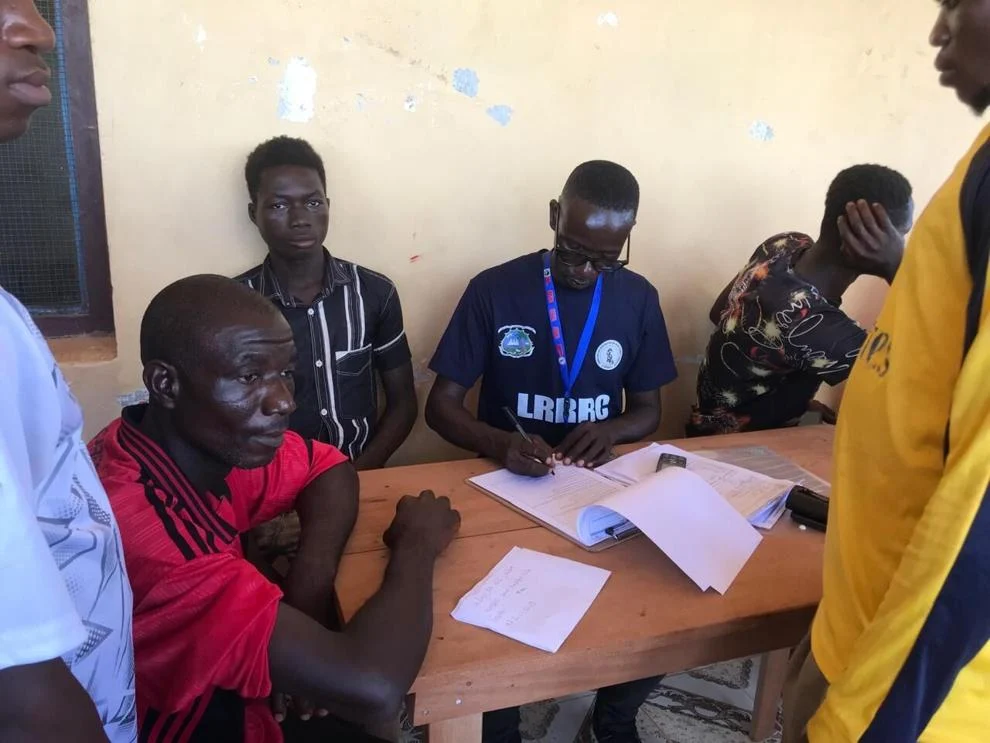
The Liberia Refugee, Repatriation, and Resettlement Commission (LRRRC) has registered nearly 7,000 Burkinabe migrants and asylum seekers across Maryland, River Gee, and Grand Gedeh counties. This effort aims to address the growing migration crisis fueled by political turmoil, ethnic conflicts, and a coup in Burkina Faso.
LRRRC Regional Director Thomas Jokan highlighted the importance of this registration process, noting the challenges posed by the influx of Burkinabe migrants on Liberia’s resources and infrastructure. While their contributions to agriculture are significant, their unregulated presence has created security, economic, and social pressures.
The profiling effort, approved by the Liberian government, aims to differentiate migrants from asylum seekers and understand their reasons for being in Liberia. A dialogue involving key stakeholders, including the Liberia Immigration Service (LIS), was held in Paynesville Town Hall to strengthen this process.
Some Burkinabe migrants, like Gbarblor Town resident Bonkoungou Moussa, have called for an extension of the registration deadline to ensure everyone is included. Many fear interactions with law enforcement due to a lack of permits.
LRRRC, established in 1993, is Liberia’s lead agency for providing humanitarian protection to refugees, stateless individuals, and internally displaced persons. Its efforts align with Liberia’s commitments under the 1951 Geneva Convention and the Refugee Act of 1993.
Grand Gedeh County Superintendent Alex Charsia Grant emphasized the need for joint security involvement in the profiling process. While specific figures per county are pending, Grant believes the collected data will enhance security and improve management of the Burkinabe influx.
Similarly, Maryland County Superintendent Henry Cole reported limited involvement in the registration process and is awaiting a detailed report to assess its impact.
The profiling of Burkinabe migrants is a proactive step by Liberia to manage migration challenges effectively, balancing security needs with humanitarian responsibilities.