
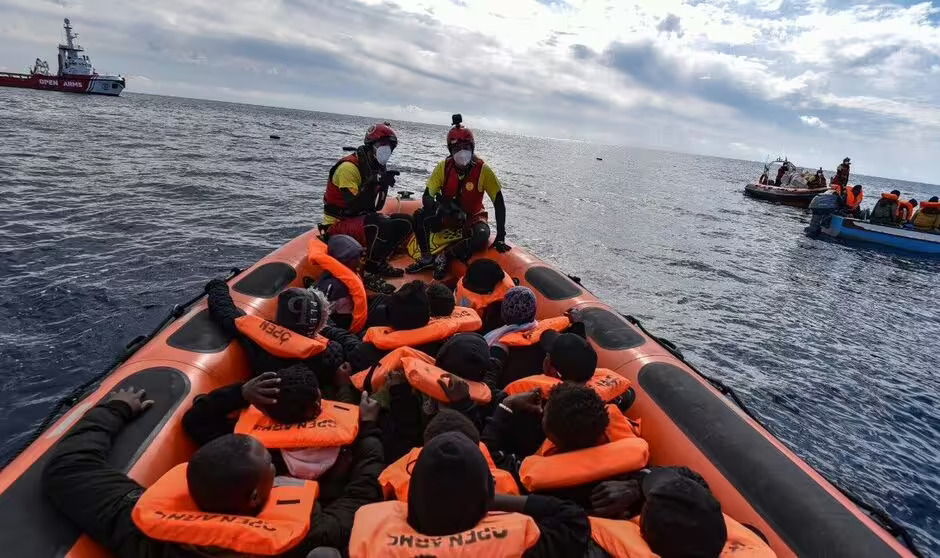
Spain has declared an emergency in the Balearic Islands after the region became Europe’s fastest-growing short sea crossing for migrants arriving from North Africa. Despite a national decline in irregular migration, the islands have seen a major increase, with more than 6,000 migrants arriving by the end of September 2025, official figures show.
Data released in August revealed that irregular migration to the Balearics rose by 170 percent in the first half of 2025, reaching around 3,000 people. The majority of the small wooden boats, known as pateras, are believed to have departed from Algeria, signalling a shift in migration routes from Mauritania and the Canary Islands to Spain’s eastern coast.
Local authorities in Mallorca, Menorca, Ibiza, and Formentera say they feel abandoned by Madrid, fearing that the Balearics could become the next major gateway for African migrants, similar to the Canary Islands, which saw 47,000 arrivals at the height of the migration surge in 2024.
Balearic regional leader Marga Prohens expressed frustration on social media, asking, “Where is the government of Pedro Sanchez?” She urged for greater cooperation with Algeria and more law enforcement resources to manage the growing influx.
In response, Spain’s central government announced it would strengthen the islands’ capacity to manage arrivals. It allocated €6.7 million in funding and ordered the construction of three new emergency centres in Formentera, Ibiza, and Palma, while the Civil Guard increased patrols along the coast.
However, local reports suggest that new arrivals are still being left for hours in public parks due to a shortage of shelters, before being moved to the mainland. Social media videos show migrants disembarking on crowded tourist beaches and walking along rural roads after perilous Mediterranean crossings.
According to Alfonso Rodriguez, Spain’s representative in the Balearics, the migrant profile has shifted significantly. In 2024, two-thirds of arrivals were from northwest Africa, but this year, most come from sub-Saharan Africa, driven by conflicts in Somalia, Sudan, and Mali. He said people-smuggling mafias are exploiting desperation and putting lives at risk for profit.
Tragically, the perilous crossings have claimed dozens of lives this year. At least 45 bodies have been recovered from Spanish waters, with many more missing. In September, six migrants drowned after their boat capsized off the coast of Almeria, underscoring the dangers of these journeys.
The crisis has also inflamed political tensions, with the conservative Popular Party-led Balearic government accusing Prime Minister Pedro Sanchez of lacking an effective migration strategy.
Last year, a viral video showed 20 migrants landing on a crowded Mallorca beach, walking past stunned tourists. Such scenes are becoming more frequent, leaving residents and visitors concerned about safety and the humanitarian situation.
As the migrant emergency grows, local leaders are calling for stronger cooperation with North African nations and a unified national response. With arrivals showing no sign of slowing, the Balearic Islands now stand at the center of Europe’s newest migration route — and one of its most urgent humanitarian challenges.