
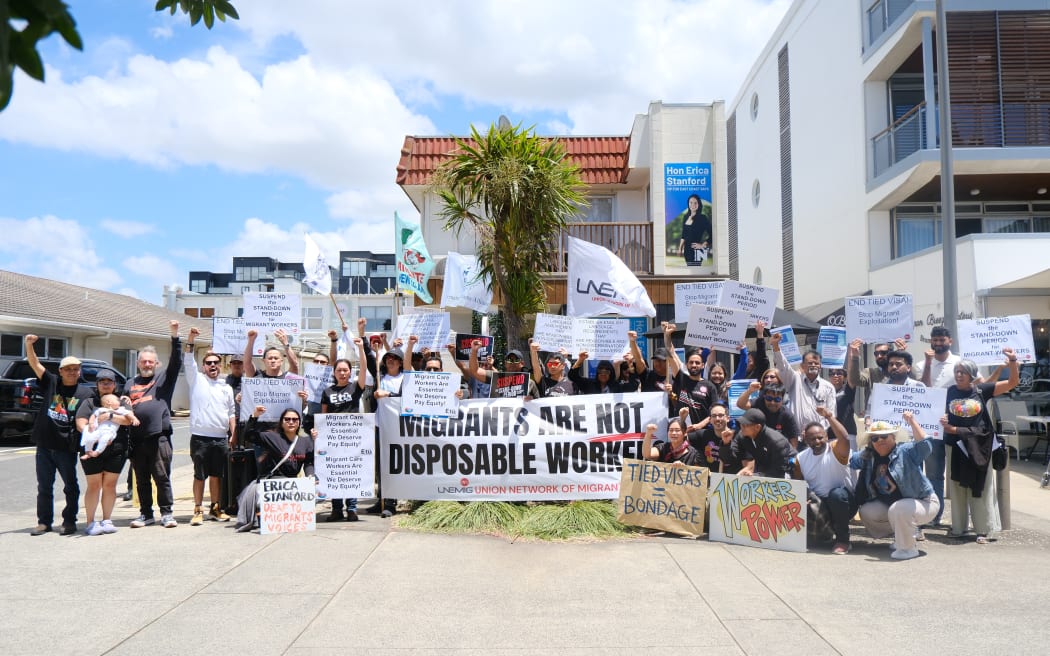
Dozens of protesters gathered outside the Auckland electorate office of Immigration Minister Erica Stanford in Browns Bay on Thursday, calling attention to what they described as continued migrant exploitation and a lack of action from the government. The protest was organised by the Union Network of Migrants (UNEMIG) and supported by several migrant and workers’ rights groups.
Groups at the protest included the Migrant Workers Association NZ, Migrante Aotearoa, United Filipino Bus Drivers, Migrant Rights Network and the International Migrant Alliance. Protesters said they were demanding fair treatment, better protections and stronger policies to stop the abuse of migrant workers across New Zealand.
One major issue raised was New Zealand’s tied visa system, which links migrant workers to a single employer. Protesters said this system creates fear and silence, as workers may be afraid to report abuse because losing their job could also mean losing their legal right to stay in the country.
The demonstration also focused on the mandatory 12-month stand-down period for lower-paid Accredited Employer Work Visa (AEWV) holders. According to organisers, this rule forces many migrant workers to leave New Zealand once their visas expire, even when they have jobs and families settled in the country.
UNEMIG president Mandeep Bela said the immigration system creates a strong power imbalance that leaves migrants vulnerable. He stressed that migrants should not be treated as disposable labour and should have the same rights and protections as all other workers in New Zealand.
Former Labour MP Ibrahim Omer also spoke at the protest, saying visas tied to employers can easily lead to exploitation. While he acknowledged that most employers follow the rules, he said even a small number of abusive employers cause serious harm to migrant workers and New Zealand’s reputation.
The protest comes after several recent cases of migrant exploitation. In October, a man received home detention for immigration fraud, while a Hamilton woman was sentenced for exploiting migrant workers and failing to pay wages. These cases have renewed public concern about gaps in enforcement.
Although the government recently passed the Immigration (Fiscal Sustainability and System Integrity) Amendment Bill to strengthen protections and punish exploitation, protesters said more action is still needed. They delivered a letter to the minister’s office, urging direct engagement with migrant communities and real changes to visa policies.