
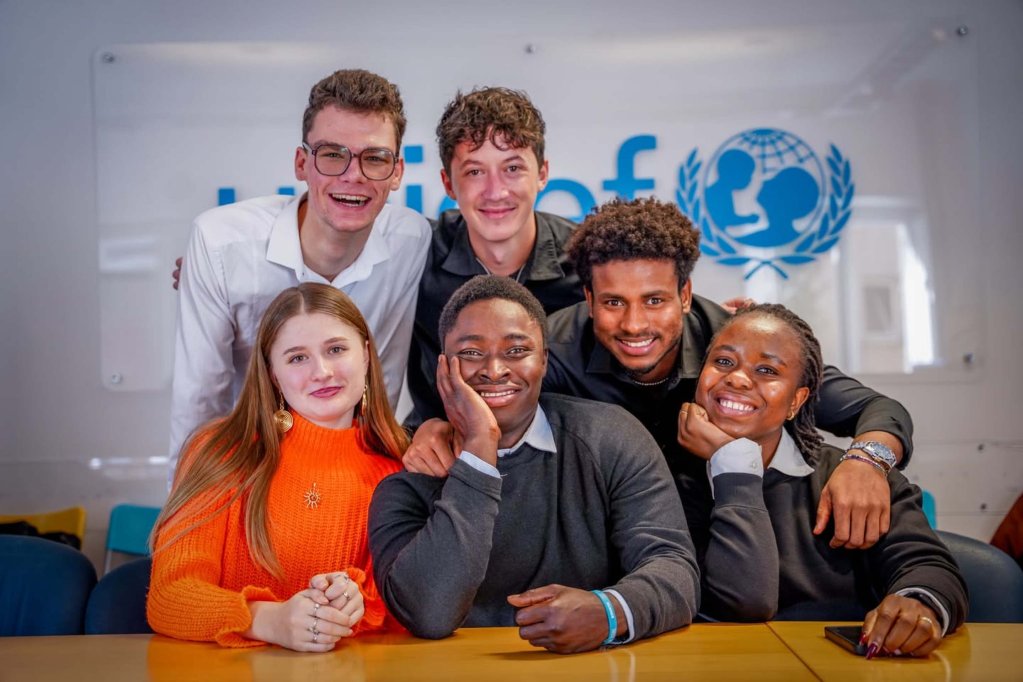
UNICEF has called on authorities in Italy to adopt more inclusive and child-focused policies to better support migrant and refugee children, following new findings that reveal serious gaps in access to guidance, mental health support, and protection from exploitation. The call was made during the second dialogue between young people with migrant backgrounds and local institutions, held earlier in December to mark International Migrants Day.
The dialogue brought together migrant and refugee adolescents, young adults, and representatives of key Italian and European institutions to openly discuss the challenges faced by young people with foreign backgrounds. Ahead of the event, UNICEF carried out several surveys involving nearly 1,300 boys and girls aged between 15 and 19. The surveys focused on critical issues such as career guidance, access to education and jobs, mental health, and awareness of gender-based violence.
The findings showed that many young migrants struggle to access clear and useful information about education and employment opportunities. Around 23 percent of respondents said they received insufficient information on these issues, while an even larger group, 32 percent, said they had not received any information at all. This lack of guidance makes it harder for young people to plan their futures and successfully integrate into society.
Support at a personal level was also found to be limited. Only four out of ten respondents said they felt supported in pursuing their personal or career goals. About half of those surveyed said they had not received enough support, highlighting a major gap in mentoring and guidance services for migrant youth.
Another serious concern raised by the survey was labour exploitation. Almost half of the respondents, 44 percent, said they had worked at least once without a contract. This exposes young migrants to unsafe working conditions, low pay, and abuse, while denying them basic labour rights and legal protection.
Mental health challenges were also widely reported. While about half of the young people said they felt listened to, many others said they often felt ignored or excluded. Thirteen percent said their composing were rarely taken seriously, and one in ten said they never felt listened to at all. Only 23 percent said they always felt supported, while 28 percent said they never felt supported when dealing with emotional or psychological difficulties.
Awareness of gender-based violence was another area of concern. Just over half of the respondents, 52 percent, said they clearly understood what gender-based violence means. This suggests that nearly half of migrant boys and girls may not be able to recognize abuse, harassment, or discrimination linked to gender. Even more worrying, only 35 percent said they knew where to seek help if they experienced such violence.
The survey also showed low awareness of online risks. Two out of ten respondents said they did not believe gender-based violence could occur online. UNICEF said this points to the urgent need for better education on digital safety, online abuse, and the prevention of violence in digital spaces.
During the event, steering groups made up of young people and institutions shared key recommendations to address these problems. They called for clear and accessible information that is adapted to language, age, and gender needs, so young migrants can better understand their rights and available services. Other priorities included more training for professionals working with unaccompanied minors and young adults, as well as the creation of safe spaces for dialogue, participation, and youth engagement.
The dialogue was attended by representatives from the Ministry of the Interior, the Ministry of Labour and Social Policies, the Ministry of Education and Merit, the Ministry of Health, the Department for Equal Opportunities, the European Commission’s Directorate-General for Migration and Home Affairs, and the National Office against Racial Discrimination.
Nicola Dell’Arciprete, UNICEF Coordinator in Italy for the Regional Office for Europe and Central Asia, said the presence of institutions at the meeting was an important step forward. He noted that while much work remains, listening directly to migrant children and young people helps turn their rights and hopes into real action. He added that every conversation with unaccompanied minors brings greater understanding and helps build more inclusive reception and integration policies that truly respond to their needs.