
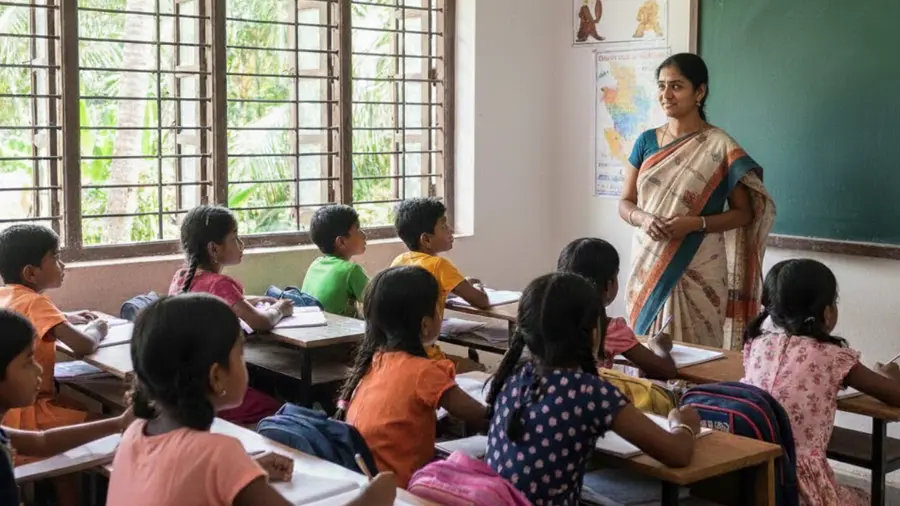
Kerala has recorded a major rise in school enrolment among children of migrant workers under its Jyothi education scheme. In just one year, enrolment increased by 3,226 students, showing strong progress in inclusive education.
Official figures show that the number of migrant children enrolled in schools rose from 21,299 in the 2023–24 academic year to 24,525 in 2024–25. The increase highlights the impact of focused government policies aimed at ensuring no child is left out of education.
The Jyothi scheme was introduced to address long-standing challenges faced by migrant families, especially children who often miss out on schooling due to frequent movement and lack of access. Under the programme, children aged three to six are enrolled in anganwadis, while those aged six and above are admitted into public schools.
Migrant workers play a key role in Kerala’s economy, with more than 35 lakh workers employed across different sectors. Many live in the state with their families, prompting the government to extend free and universal public education to their children.
To make the programme effective, the state carried out door-to-door outreach in migrant settlements. Local self-governments, Kudumbashree workers, teachers, and parent-teacher associations worked together to identify children who were out of school and ensure their enrolment.
The scheme builds on earlier initiatives such as the Roshni project. The State Council of Educational Research and Training (SCERT) has also developed a structured education plan to support migrant children. A local registration system now tracks children’s movement to help maintain continuity in learning even when families relocate.
Beyond education, the Jyothi scheme includes health check-ups, medical camps, hygiene awareness, and guidance on healthy living. Children are also encouraged to take part in arts, sports, and cultural activities, helping them grow socially and emotionally.
Why is the Jyothi scheme important for migrant children?
It helps migrant children access education, healthcare, and social support, ensuring they are included in the public system despite frequent migration.