
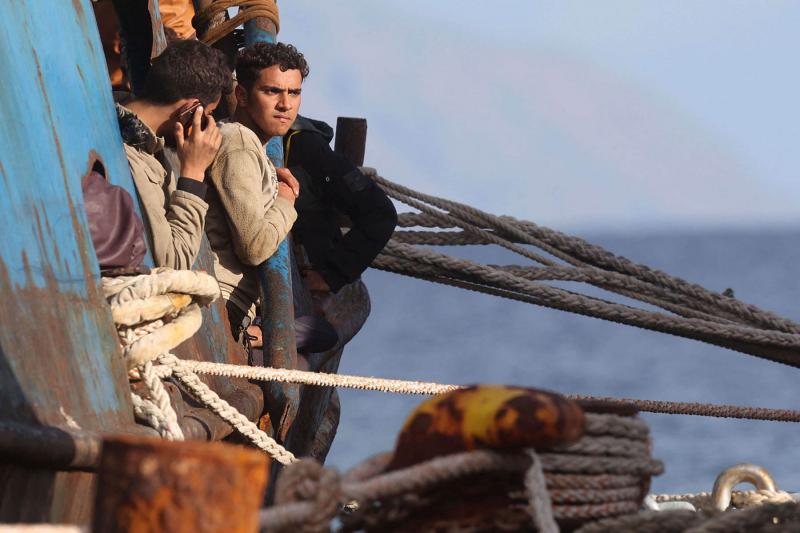
Crete and the small island of Gavdos are currently among the Greek isles recording the highest number of migrant sea arrivals, despite dangerous winter sea conditions. In recent days, hundreds of migrants have been rescued and transferred to these southern islands, putting renewed pressure on local reception facilities.
Early on Wednesday, January 7, Greek authorities discovered a boat carrying 44 migrants on a beach in Gavdos. The group was given first aid, food, and water before being moved to the island’s main port at Karave. Plans are in place to transfer them by ferry to southern Crete.
Once in Crete, the migrants are expected to be taken to the temporary reception centre at Agyia, near Chania. However, the facility is already overcrowded. More than 470 migrants rescued in earlier operations have been staying there for almost 10 days, raising concerns about safety and public health.
With the latest arrivals, the number of people at the Agyia centre is expected to rise above 510. Some migrants rescued in the area are still waiting to be moved to other facilities as authorities struggle to manage the growing numbers.
Efforts to reduce overcrowding have been delayed due to fully booked ferry services. Increased travel by returning holiday passengers has made it difficult to move migrants to the mainland, according to local reports.
Despite rough winter seas, migrant crossings from Libya to southern Greece continue. On December 27, the Greek coast guard rescued 131 migrants south of Gavdos, bringing the total number rescued in the area within five days to about 840 people.
The journey from Libya to Crete remains extremely dangerous. Earlier in December, at least 17 migrants were found dead after their boat sank off Crete’s coast, while 15 others were reported missing. Only two people survived the incident.
According to the UN Refugee Agency (UNHCR), more than 16,770 migrants have arrived in Crete since the start of 2026, making it the Greek island with the highest number of sea arrivals. The government has described recent measures to suspend some asylum processing as necessary, as migration routes into Greece remain active and risky.