
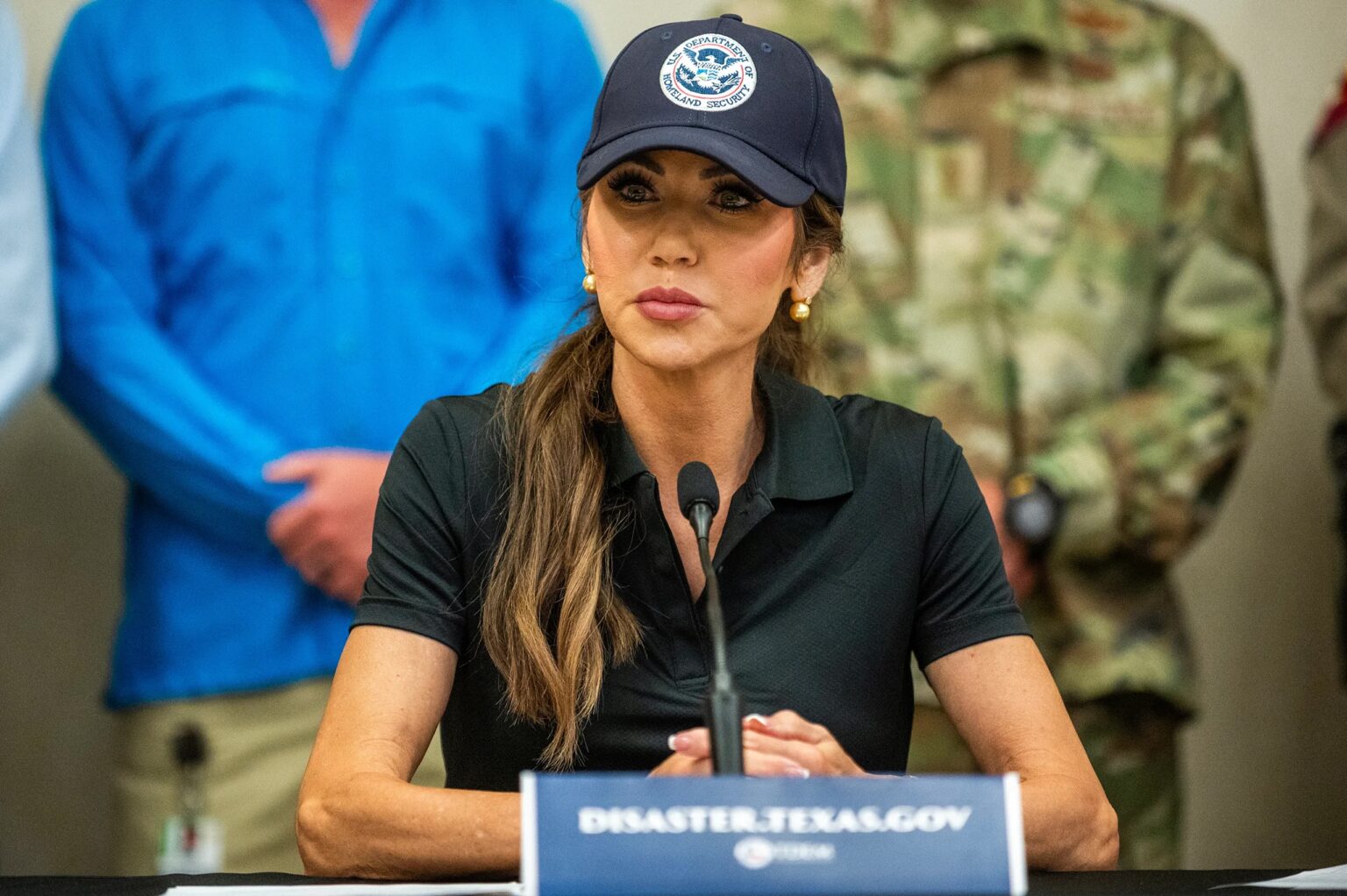
The United States Department of Homeland Security has announced plans to install more than 500 miles of floating buoys along the Rio Grande to stop migrants from crossing into the country. The announcement was made in McAllen, Texas, as part of President Donald Trump’s renewed border security drive. The plan expands on a strategy first used by the Texas state government.
Homeland Security Secretary Kristi Noem said that 130 miles of the water barriers are already under contract and installation has begun. She made the statement during a visit to the Rio Grande Valley, where she met with border agents and local ranchers whose land is often used by migrants after crossing the border.
The buoys are large floating cylinders that can be as long as 15 feet and several feet wide. They are designed to make it difficult for people to swim across the river. According to Noem, the barriers will help stop illegal migration, drug smuggling, and human trafficking along the southern border.
The water barriers are part of what the Trump administration calls a “Smart Wall.” This system includes steel barriers, floating barriers, patrol roads, lights, cameras, and modern detection technology. Funding for the project comes from the 2025 tax and spending bill signed into law by President Trump, known as the One Big Beautiful Bill.
Texas Governor Greg Abbott has already used similar buoys along the Rio Grande. In 2023, the state installed a 1,000-foot stretch of floating barriers near Eagle Pass, followed by another 1,000 feet after Trump returned to office in January 2025. Abbott’s office says the buoys have been effective in reducing illegal crossings.
However, the use of buoys has caused strong reactions. Migrant rights groups say the barriers are dangerous and could lead to deaths. The Mexican government has also complained that the buoys violate international water agreements between the two countries. Under former President Joe Biden, the U.S. Justice Department sued Texas over the issue, though a federal appeals court allowed the buoys to remain while the case continues.
Despite the criticism, Noem defended the plan, saying the barriers would save lives by discouraging people from attempting risky river crossings. She said securing the river would protect border agents, local communities, and migrants themselves by reducing dangerous journeys across the water.