
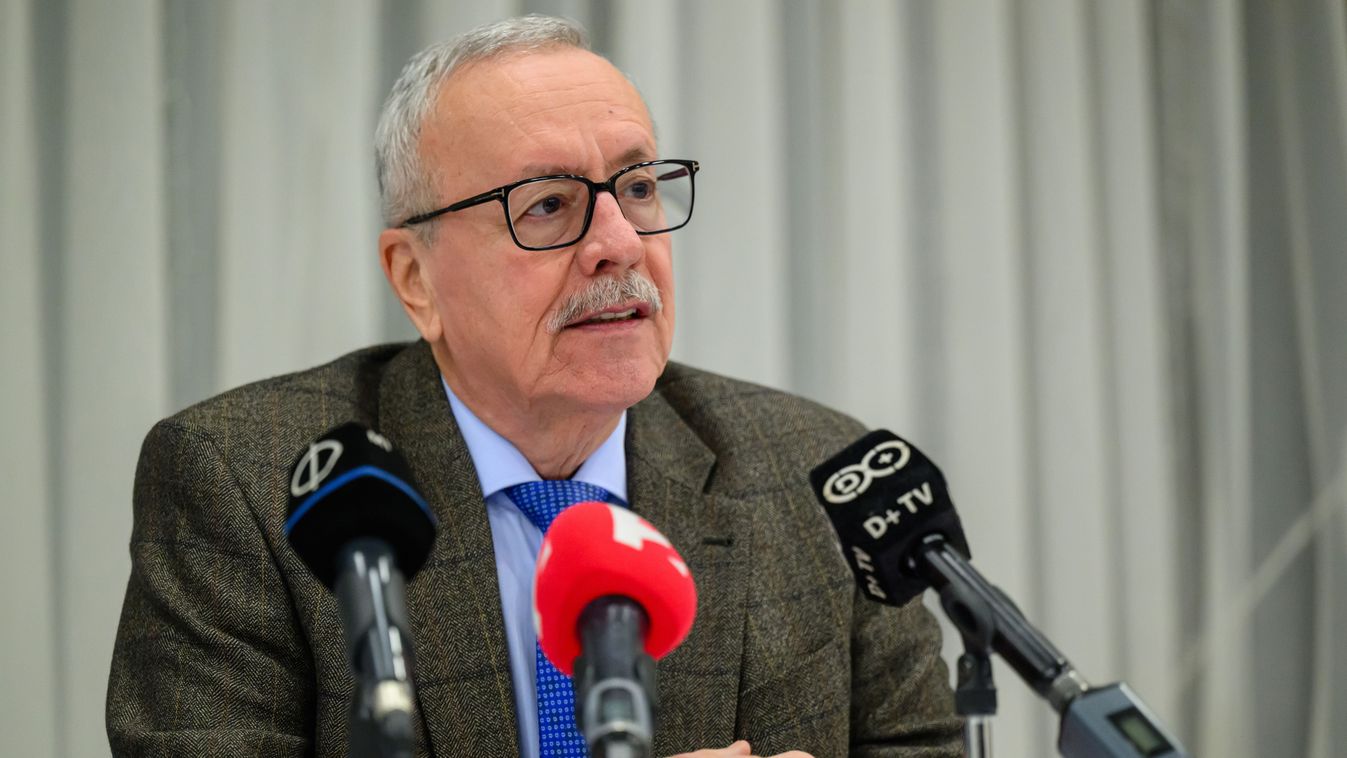
Hungary’s government has stated that its migration policy is working well and will remain unchanged. György Bakondi, the prime minister’s chief domestic security adviser, stated during an interview on Hungary’s public television channel M1. He said the policy has protected the country and served Hungary’s national interest.
Bakondi said many decisions taken by the European Union go against the interests of European citizens. He mentioned EU policies on war, energy, and migration as examples. In contrast, he said Hungary’s migration approach has delivered clear results, and more countries are now starting to admit this.
He pointed out that in some major Western European cities, people with a migrant background now make up more than 30 to 40 percent of the population. According to him, some schools have very few children without a migrant background. He added that stopping these changes has become very difficult in those countries, and that mass migration would first need to be halted.
Bakondi also spoke about Cyprus, which took over the rotating presidency of the European Union on January 1. He said Cyprus benefits from the EU migration pact because other member states are expected to take in migrants arriving there. At the same time, he noted that Cyprus could use its role to raise concerns about the pact, especially since it has faced strong migration pressure itself.
He said migration policy is changing across the region. Countries such as Greece and Cyprus are tightening border controls, changing laws, and building physical border barriers. He added that more countries are now rejecting the EU migration pact in its current form, including Hungary, Poland, the Czech Republic, Slovakia, Austria, and Italy.
Despite these developments, Bakondi said Brussels has not changed its position on Hungary. He said the country continues to face fines and political pressure, even though Hungarian authorities stopped about 12,500 illegal border crossings last year.
Bakondi stressed that Hungary will not allow others to decide who enters the country. He said Hungary will not build large migrant settlements and will not abandon what he called a successful migration policy. He warned that if the EU migration pact is enforced, it could have serious effects on Hungary’s daily life and internal security.
Why does Hungary say its migration policy is successful?
The government says the policy has reduced illegal border crossings, improved public safety, and prevented the social problems seen in some Western European countries.