
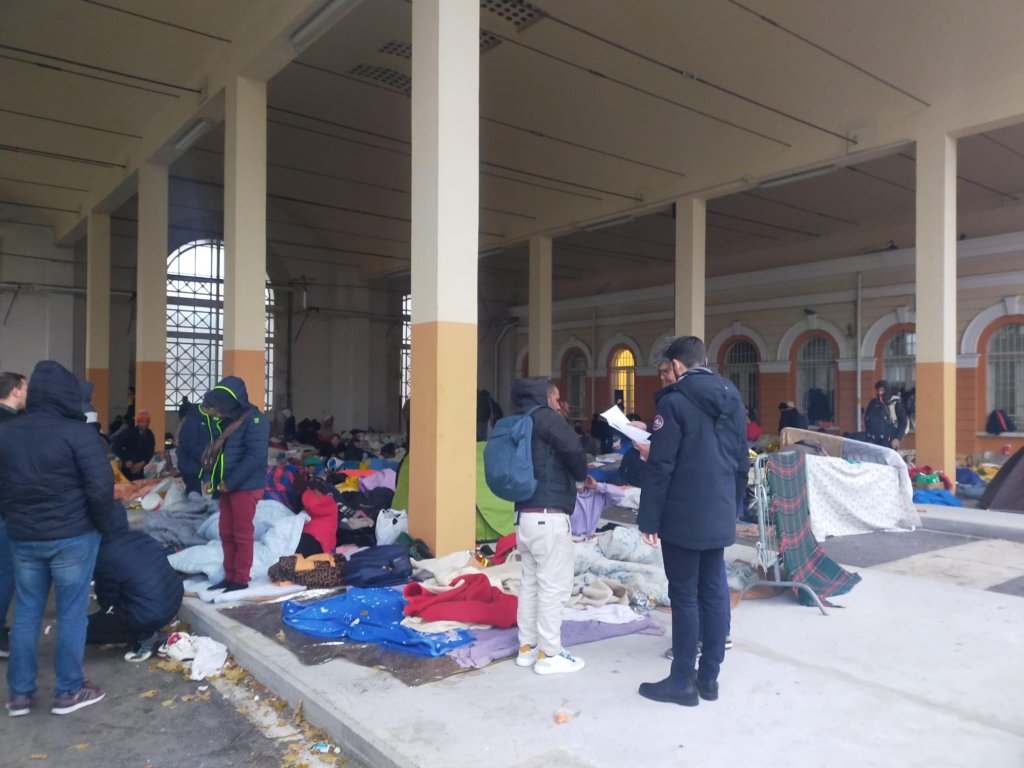
A 43-year-old migrant from Nepal has died after falling seriously ill while sheltering in abandoned warehouses at Trieste’s Old Port in northern Italy. The man suffered a cardiac arrest last Saturday and later died in hospital on January 13, sparking renewed criticism over the treatment of asylum seekers in the city.
The man collapsed in the disused warehouses of Porto Vecchio, an area where many migrants sleep due to a lack of accommodation. Fellow Nepalese migrants raised the alarm after finding him in critical condition. Emergency services rushed him to Cattinara Hospital in Trieste, but his condition continued to worsen. Doctors later confirmed that the cardiac arrest was caused by a pulmonary embolism.
Human rights groups say the man had been living outdoors for weeks, exposed to harsh winter conditions. According to the Italian Consortium of Solidarity (ICS), he likely arrived in Trieste around Christmas and had been sleeping in freezing temperatures, with recent nights dropping below zero degrees.
ICS revealed that just one day before he fell ill, the man had tried to access the police headquarters to begin the asylum application process. However, he was reportedly unable to enter the offices and was turned away. The organisation described this as a clear failure of the asylum system and said the suspension of migrants’ rights in Trieste is putting lives at risk.
The incident triggered strong reactions from civil society groups and local politicians. ICS publicly condemned what it called the “suspension of rights” for asylum seekers, warning that denying access to reception and healthcare systems can have fatal consequences.
Regional Security Councillor Pierpaolo Roberti rejected the accusations, saying that blaming law enforcement for the migrant’s illness amounted to “political scavenging.” He argued that responsibility should not be placed on police officers.
Meanwhile, municipal councillor Alessandra Richetti from the Five Star Movement said the conditions in which the migrant was living were “inhumane and dangerous.” She stressed that migration is a reality that must be properly managed, especially in border cities like Trieste.
Police union representatives also weighed in on the situation. Fabrizio Maniago, secretary general of the Friuli Venezia Giulia branch of the Italian Union of Police Workers (Siulp), said the pressure on local authorities has grown significantly. He explained that while Trieste received around 100 to 150 asylum seekers per year two decades ago, today up to 120 people can arrive in a single day during peak periods. At the same time, the number of police officers has dropped from about 600 to 400.
ICS president Gianfranco Schiavone said the migrant’s death could have been prevented. He explained that prolonged exposure to cold and homelessness likely caused or worsened the man’s medical condition. According to Schiavone, under normal circumstances, the illness could have been treated in time.
Schiavone stressed that the migrant had the legal right to access Italy’s reception system and healthcare services but received neither. He said the man was effectively abandoned outdoors despite the risks to his health.
“He was left outside in freezing temperatures, and he is not the only one,” Schiavone said. He added that dozens of migrants visit day-centre clinics every day suffering from respiratory illnesses and other health problems. These clinics, he noted, often lack specialised equipment and the ability to carry out proper medical tests.
The warehouses at Trieste’s Old Port, where many migrants seek shelter, have been repeatedly closed and sealed by authorities. However, Schiavone said shutting these spaces without providing alternative accommodation only worsens the situation. “It is not enough to close places that are unsuitable,” he said. “Something else must be opened.”
He concluded by warning that access to the asylum procedure in Trieste continues to function poorly, leaving vulnerable people exposed to serious health risks and, in some cases, death.