
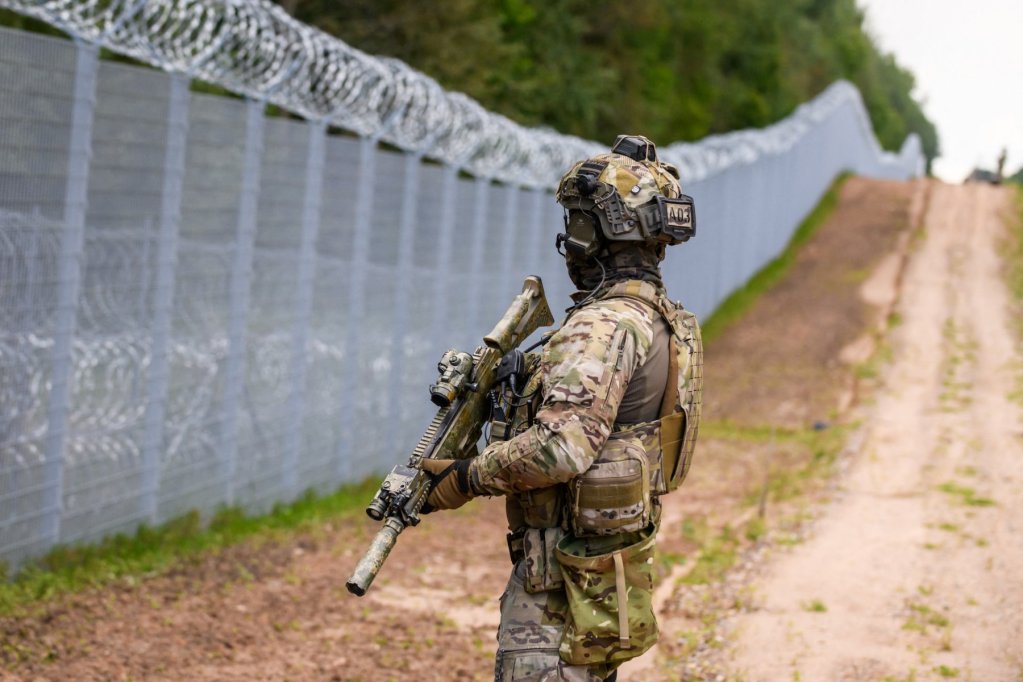
Latvia has presented new evidence claiming that Belarus is actively involved in organising and directing illegal migrant crossings into the European Union. Latvian authorities say the evidence shows that Belarusian military and law enforcement units are helping migrants reach and cross the Latvian border, adding weight to long-standing accusations that Minsk is using migration as a political weapon against the EU.
In a statement released on Thursday, January 15, Latvia’s Ministry of Defence said information gathered by the National Armed Forces and the State Border Guard confirms the direct involvement of Belarusian state structures. According to the ministry, recorded incidents and intelligence reports show that Belarusian forces have been guiding migrants towards Latvia’s border.
The evidence includes photos, videos and military documents found on migrants’ mobile phones after they crossed into Latvia. Some of the images reportedly show Belarusian border guards standing with groups of migrants, while others suggest organised transport to specific border areas. Latvian officials say there are confirmed cases where Belarusian border guards drove migrants to different locations and instructed them on where and how to cross into Latvia.
Latvian authorities also said the confiscated materials appear to belong to the reconnaissance battalion of Belarus’s 19th Guards Mechanised Infantry Brigade, which is based in the Vitebsk region. However, officials did not explain when or exactly where the photos and documents were taken, leaving some details unclear.
The European Union has repeatedly accused Belarus, often alongside its ally Russia, of using migrants to destabilise EU border states. This tactic has been described by EU officials as “hybrid warfare”, aimed at creating political pressure, social tension and security challenges in countries along the bloc’s eastern border.
The so-called “Belarus route” first emerged in August 2021, when Belarusian leader Aleksander Lukashenko began allowing large numbers of migrants from the Middle East and Africa to enter Belarus freely. Many were flown into Minsk and later transported by state-linked services to the borders with Latvia, Lithuania and Poland, all of which are EU member states.
Human rights groups have criticised how the crisis has been handled on both sides of the border. Amnesty International reported in 2022 that Latvian authorities committed serious human rights abuses, including secret detentions and allegations of torture, while trying to stop irregular crossings.
Lukashenko has repeatedly denied encouraging migrants to cross into the EU. However, EU officials and neighbouring countries say these claims lack credibility. In late 2025, Polish authorities discovered an underground tunnel running from Belarus into Poland, believed to have been used for migrant smuggling. It was the fourth such tunnel found that year, further raising concerns about organised efforts to move migrants into the EU.
Latvia says the latest evidence strengthens its case that migrant flows at its border are not spontaneous, but carefully planned and supported by Belarusian state actors.