
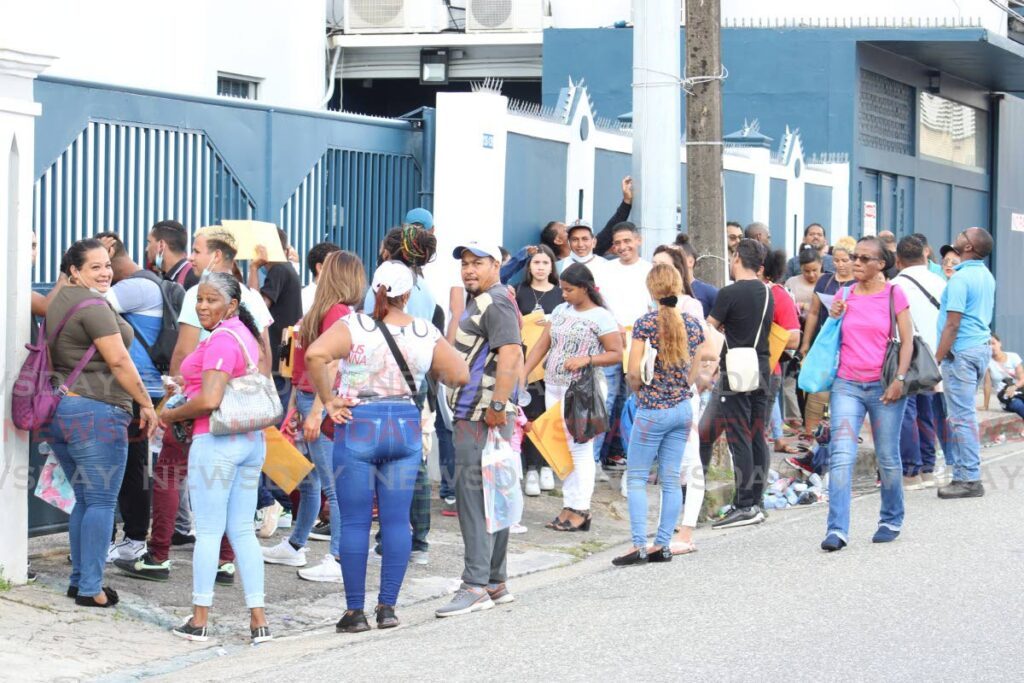
The government of Trinidad and Tobago has announced that it will begin registering all undocumented migrants in the country starting next Friday under a new Migration Registration Framework. The announcement was made by Minister of Homeland Security Roger Alexander, who said the initiative is aimed at improving migration management and national security.
The registration exercise will apply to all undocumented migrants living in Trinidad and Tobago, regardless of their nationality. The process will be carried out by the Ministry of Homeland Security in collaboration with the Ministry of Defence, as part of a coordinated government effort to collect accurate data on migrant populations in the country.
According to the minister, the registration process will start with an online application through the official government website, migrantregistration.gov.tt. After completing the online form, applicants will be scheduled for an in-person interview. Once the interview is completed, registered migrants will be issued a Migration Registration Framework card. In-person registration is expected to fully commence after the Carnival celebrations.
Alexander said the government has identified several locations across the country where in-person registration will take place. These include the Larry Gomes Stadium in Arima, the Ato Boldon Stadium in Couva, the Hasely Crawford Stadium in Port of Spain, and the Dwight Yorke Stadium in Tobago. These venues were chosen to ensure wide access and ease of movement for migrants.
A registration fee of 700 Trinidad and Tobago dollars will be charged per adult, while children will be exempt from payment. The total cost of the registration programme is estimated at around one million TT dollars. This is significantly lower than the five million dollars spent during the last migrant registration exercise in 2019. The minister explained that the reduced cost is due to the use of existing government facilities rather than rented spaces.
The minister noted that the new system is partially digital, which is expected to improve accountability, transparency, and data accuracy. He said the framework will also allow registered migrants the opportunity to work legally in Trinidad and Tobago, helping them contribute to the economy while reducing exploitation and irregular employment.
However, Alexander issued a strong warning to undocumented migrants who fail to register. He said that any undocumented migrant who does not take part in the registration process and is later discovered by authorities could face immediate deportation. He urged all affected migrants to comply with the process once registration begins.
The government says the Migration Registration Framework is part of a broader strategy to bring order to the migration system, protect national security, and provide migrants with a legal pathway to live and work in Trinidad and Tobago.