
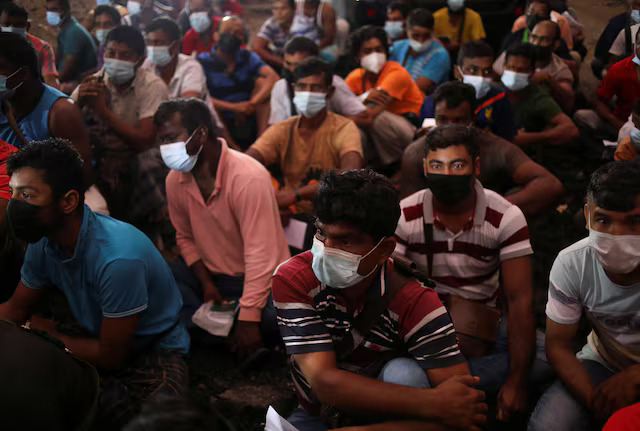
Malaysia’s migrant recruitment industry has become a highly profitable business for recruiters, agents, and political insiders, but for workers, it often leads to debt, exploitation, and broken promises. Thousands of migrant workers, especially from Bangladesh, borrow huge sums of money to secure jobs in Malaysia, only to arrive and discover that the promised work does not exist or pays far less than expected.
One such case is that of Shofiqul Islam, a Bangladeshi farm worker who borrowed about $4,400 to take a construction job in Malaysia. After arriving, he was dropped in a crowded and poorly maintained dormitory near Kuala Lumpur and told to wait. Days turned into months, but the job never came. His employer stopped responding, his visa expired, and his debt continued to grow. Despite his suffering, he reassured his family back home that everything would soon be fine.
Shofiqul was one of more than 800,000 Bangladeshi workers who entered Malaysia over the past decade. Many paid recruitment fees far higher than migrants from other countries. Interviews with officials, recruitment agents, and migrant workers show the system is deeply affected by corruption, with multiple actors demanding unofficial payments at every stage. This has created a cycle where workers are trapped in debt bondage and are vulnerable to forced labor and human trafficking.
Malaysia depends heavily on migrant labor. Foreign workers make up about one-fifth of the country’s workforce and play a major role in construction, agriculture, manufacturing, and electronics. Despite their importance, many live in overcrowded housing, work long hours, face wage theft, and are regularly harassed by authorities. Because most are deeply indebted, they are afraid to complain or change jobs.
A major part of the controversy surrounds a digital recruitment system known as Bestinet, which was introduced to manage migrant recruitment. While it was promoted as a tool to reduce corruption, critics argue it instead centralized control and increased costs for Bangladeshi workers. Under the system, recruitment was limited to a small group of agencies, allowing fees to rise sharply. Some agents allegedly charged illegal “syndicate fees,” pushing total recruitment costs to as much as $6,600 per worker.
Bangladesh’s authorities later arrested dozens of recruitment agents over allegations of money laundering, extortion, and trafficking. They also requested investigations into key figures involved in the recruitment system. However, progress has been slow, and Malaysia continues to use the same framework despite growing international concern.
Shofiqul’s situation ended tragically. After months without work, he collapsed in his dormitory and died. His family was never told the cause of death. His widow received only part of the money he paid for recruitment and is still struggling to repay the remaining debt. She has returned to her parents’ home with her children, uncertain about the future.
Labour rights activists warn that Malaysia’s recruitment pipeline from Bangladesh is among the most exploitative in Asia. They say global companies sourcing goods from Malaysia cannot ignore the risks of forced labor in their supply chains. Until recruitment fees are controlled and accountability is enforced, migrant workers will continue to pay the highest price while others profit from their desperation.