
The killing of a 36-year-old Uzbek migrant woman in central Istanbul has sparked protests in Turkey’s largest cities and reignited national debate over violence against women, migrant safety, and the effectiveness of state protection systems. The case has drawn strong reactions from women’s rights groups, migrant communities, and officials from Uzbekistan.
The woman’s body was discovered on January 24 in a waste container in Istanbul’s busy Şişli district. According to Turkish media reports, a person collecting recyclable materials found the body and alerted police. Authorities said the victim had been wrapped in bedding, and early reports indicated that parts of her body were missing when she was found. Investigators launched a search in the surrounding area as part of the ongoing forensic process.
Turkish police quickly opened an investigation. Surveillance footage reportedly showed two individuals leaving a suspicious suitcase near another container in the neighborhood. Media outlets in Turkey reported that three men were later detained in connection with the killing, two of them Uzbek nationals. Two suspects were reportedly stopped at Istanbul Airport while allegedly trying to leave the country. One of the suspects is said to have confessed during questioning, though the investigation and legal proceedings are still ongoing.
The victim was identified as Durdona H., an Uzbek citizen. The Consulate General of Uzbekistan in Istanbul confirmed her identity and expressed deep sorrow over the crime. Uzbek officials said they are working closely with Turkish authorities and forensic teams and are providing legal and consular assistance to the victim’s family. The consulate also stated that it would continue to monitor the case closely.
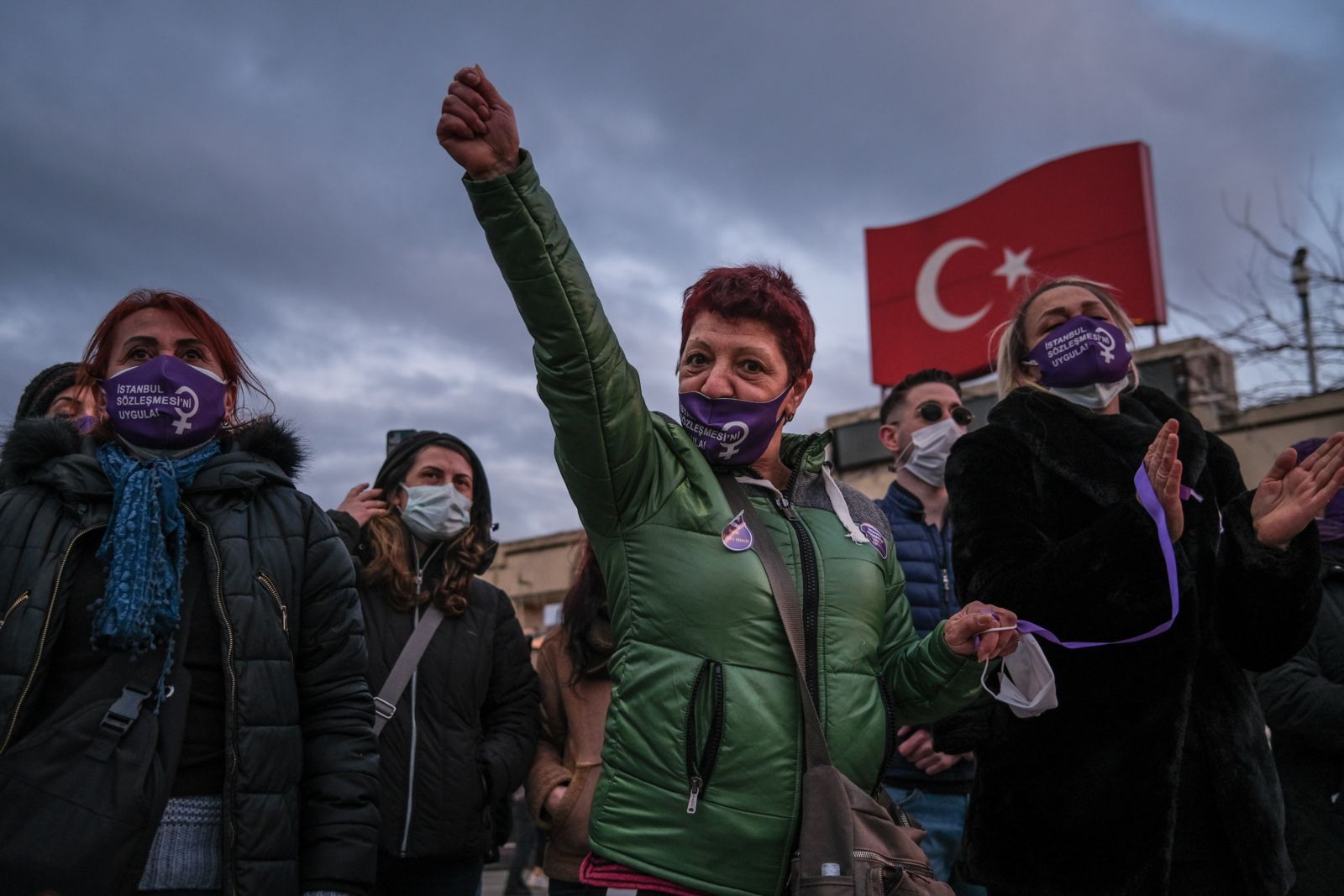
News of the killing led to immediate public anger. Women’s rights activists and feminist groups organized demonstrations in Istanbul and Ankara, saying the case reflects a wider pattern of gender-based violence. In Istanbul, protesters marched through Şişli, starting near the Osmanbey metro station and ending close to where the body was found. Demonstrators carried banners and chanted slogans demanding justice and better protection for women.
Protesters stressed that migrant women often face even greater risks due to social isolation, economic hardship, and limited access to support services. Activists said the killing should not be seen as an isolated act but as part of a larger problem of systemic violence. Police were present during the demonstrations and reportedly warned against certain slogans, but the gatherings remained largely peaceful.
Women’s rights groups across Turkey issued statements criticizing what they describe as weak enforcement of protection measures and a growing sense of impunity for perpetrators of violence against women. Some activists again pointed to Turkey’s 2021 withdrawal from the Istanbul Convention, an international treaty aimed at preventing violence against women, arguing that it reduced legal safeguards and sent a negative signal about women’s rights.
The Şişli killing also came shortly after another reported femicide in İzmir, where a woman was killed despite having a restraining order against her former partner. Advocacy groups say such cases show serious gaps in the protection system and highlight the need for stronger monitoring and enforcement of court orders.
Migrant-focused organizations also responded. The Association for the Protection of Uzbek Women’s Rights in Turkey expressed deep concern over what it described as a growing number of tragic incidents involving Uzbek women. The group emphasized that migrant women can be especially vulnerable because they may not fully understand local laws or may lack strong social networks. The organization offered condolences to the victim’s family and reminded Uzbek women in Turkey that they can seek free legal and psychological support if needed.
As the legal investigation continues, activists say they will keep pressure on authorities to ensure a full and transparent process. They are calling not only for justice in this case but also for long-term reforms to improve protection for women and migrants across Turkey. The tragedy has once again brought attention to the urgent need for stronger systems to prevent violence and support those most at risk.