
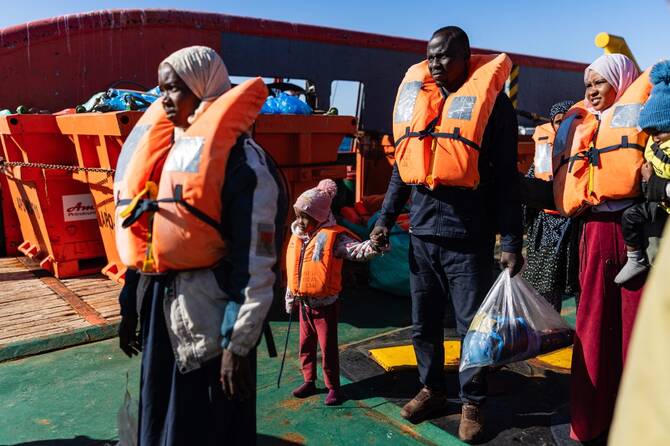
The Greek government has introduced a new bill that would sharply increase punishments for migrant smuggling, including the possibility of life imprisonment for those convicted of trafficking people. The proposal, now before parliament, is part of Greece’s effort to crack down on irregular migration while reshaping its broader migration policy.
Under the draft law, migrants who commit certain offenses could face immediate expulsion from the country. The bill also includes controversial provisions that could criminalize assistance offered by migrants who already have legal status in Greece. Authorities say these measures are necessary to break smuggling networks, but human rights groups fear the law could go too far.
More than 50 humanitarian organizations, including Doctors of the World and Médecins Sans Frontières (MSF), have criticized the proposal. They warn that aid workers and NGO staff could face harsher sentences if their work is seen as encouraging irregular migration. According to these groups, the bill may create fear and legal uncertainty that could limit life-saving humanitarian assistance, even before any court conviction takes place.
The Greek government insists the aim is not to target genuine humanitarian work but to stop criminal networks that profit from dangerous journeys. Officials say the law is part of a wider strategy that also includes opening safer and legal migration routes. These include simpler visa processes for skilled workers, residence permits for international students, and vocational training programs for asylum seekers and refugees to help fill labor shortages in certain sectors.
Despite these legal pathways, the situation at sea remains serious. In recent weeks, several deadly incidents have occurred in the Aegean Sea. Near the island of Ikaria, a speedboat carrying migrants hit rocks, leading to deaths and several people reported missing. Rescue operations involved the Greek coast guard, air force units, local fishermen, and the EU border agency Frontex.
Greek authorities have also continued to arrest suspected traffickers. In a separate operation near the island of Chios, at least one alleged smuggler was detained after another migrant boat was intercepted. These incidents highlight the continued risks migrants face when attempting to reach Europe by sea.
Since the beginning of 2026, more than 1,200 migrants have arrived in Greece through irregular routes, showing that migration pressure in the region remains high. The new bill reflects Greece’s attempt to balance strict enforcement against smuggling networks with policies that allow controlled and legal migration. However, the debate over how to protect borders while safeguarding humanitarian work and human rights is likely to continue both in Greece and across Europe.