
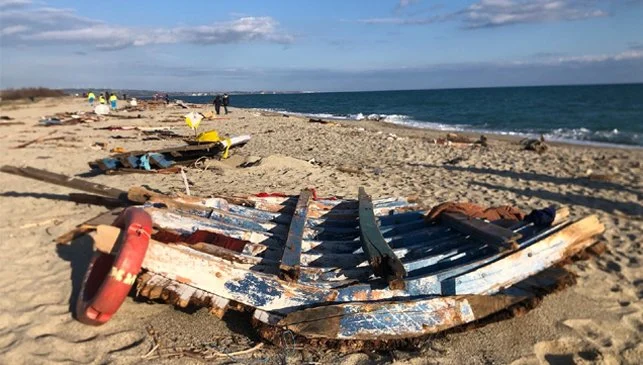
Six Italian officers are set to stand trial in a case linked to one of the deadliest migrant shipwrecks in recent European history. The trial, which will take place in Crotone in southern Italy, focuses on the events surrounding the February 2023 disaster off the coast of Steccato di Cutro in Calabria. The tragedy claimed the lives of at least 94 people, including 35 children, and has raised serious questions about how rescue operations are handled in the Mediterranean.
The officers on trial include two members of the Italian Coast Guard and four officers from the Customs Police, known as the Guardia di Finanza. Prosecutors have accused them of negligence and multiple counts of manslaughter. According to the charges, authorities failed to launch a proper search-and-rescue mission even though there were clear warning signs that the migrant boat was in distress.
The wooden boat, known as Summer Love, was carrying between 180 and 250 people. Most of those on board were believed to be from Afghanistan, Syria, and Pakistan. In the early hours of February 26, 2023, the vessel broke apart in rough seas just a short distance from the Italian coast. Around 80 people survived, but many others were never found. The disaster is now widely referred to as the “Cutro shipwreck.”
Reports suggest that the European Union’s border agency, Frontex, had alerted Italian authorities several hours before the boat sank. Despite this early warning and worsening weather conditions, rescue operations were not immediately launched. Instead, two patrol boats from the Customs Police were reportedly sent to intercept the vessel as part of a law enforcement response. Those boats later turned back due to the rough sea conditions. Prosecutors argue that this decision delayed lifesaving efforts and contributed to the high death toll.
After the shipwreck, Italian authorities opened a long investigation that lasted nearly two years. In July of last year, the public prosecutor in Crotone formally indicted the six officers. The trial was originally scheduled to begin earlier in January, but was postponed briefly due to a change of judge. Human rights groups say the case could set an important legal precedent for how European states respond to migrant boats in danger.
At least 65 survivors of the shipwreck have joined the case as civil parties. They are supported by six search-and-rescue organizations: EMERGENCY, Louise Michel, Mediterranea Saving Humans, Sea-Watch, SOS Humanity, and SOS MEDITERRANEE. These groups believe the trial is not only about the actions of individual officers but also about wider government policies that they say focus more on border control than on saving lives.
Judith Sunderland of Human Rights Watch described the trial as a crucial chance to seek justice for the victims and their families. She said the case could help reveal the truth about what happened that night and possibly prevent similar tragedies in the future. Rights groups argue that delays in rescue responses have become a serious and ongoing problem in the Central Mediterranean.
The trial comes at a time when migrant crossings in the Mediterranean remain extremely dangerous. Since 2014, more than 33,000 people have died or gone missing while trying to cross the sea. The Central Mediterranean route, which links North Africa to Italy and Malta, is still considered the deadliest migration path in the world. In 2025 alone, more than 1,300 people were reported dead or missing along this route.
Many observers say the outcome of the Cutro shipwreck trial could have a lasting impact on European migration and rescue policies. It may shape how authorities balance border enforcement with their duty under international law to save lives at sea. For survivors and families of the victims, the trial represents a long-awaited step toward accountability after a tragedy that shocked Europe and the world.