
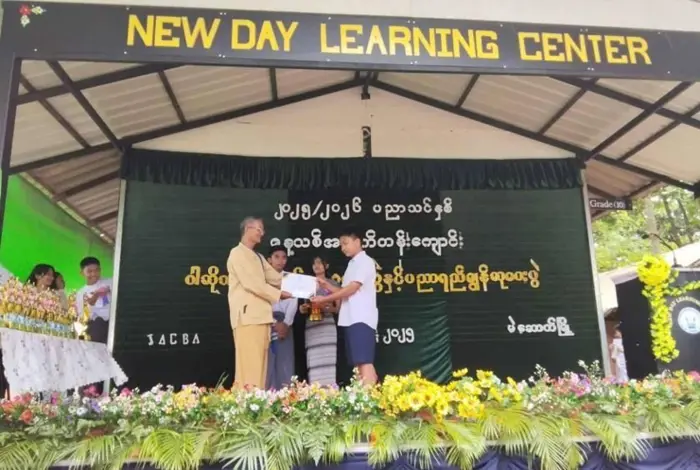
Thailand has announced a major step forward for migrant rights by granting migrant children access to school even if they do not have official documents. The new law supports migrant children’s education in Thailand and ensures that no child is denied learning because of their legal status.
The education law was published in the Royal Gazette on January 30, 2026. It guarantees the right to education for all children living in Thailand, regardless of nationality, household registration, or immigration status. This means schools can no longer refuse to enroll children who lack proper documents.
Under the new system, children without a 13-digit identification number will be allowed to study using a special “G code.” This code will remain valid throughout their education, helping schools keep records while allowing children to learn without interruption. The policy strengthens migrant children’s education in Thailand by removing one of the biggest barriers to school access.
Moe Gyo, Chairman of the Joint Action Committee for Burmese Affairs (JACBA), encouraged migrant families to take advantage of the opportunity. He said parents and schools should work together with relevant authorities to help children gradually obtain proper documentation over time.
The policy will come into effect across the country at the start of the May 2026 academic year. It applies to children of migrant workers from many countries, including Myanmar, whose families often face challenges related to legal status and access to public services.
Thailand has long promoted the principle of “Education for All,” and this new law strengthens that commitment. By improving migrant children’s education in Thailand, the government hopes to ensure that all young people grow up with knowledge and skills that allow them to contribute positively to society.
Why is education access important for migrant children?
Access to school helps migrant children build a better future, reduces child labor risks, and supports social integration. Education also benefits host countries by creating a more skilled and stable population.
The new law marks an important moment for migrant children’s education in Thailand and shows how inclusive policies can help protect children’s rights while supporting long-term development.