
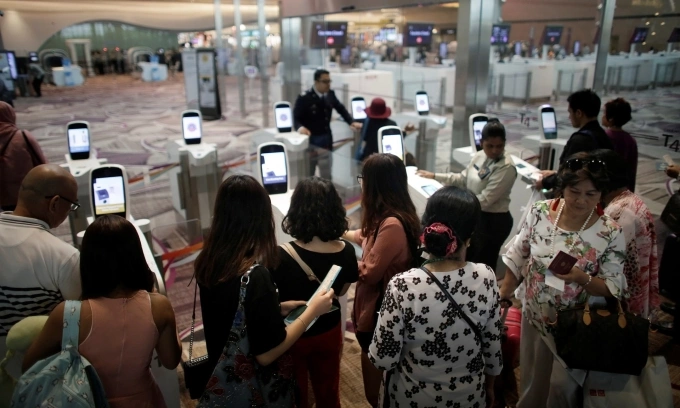
Singapore has strengthened health checks for migrant workers arriving from India’s West Bengal state after reports of Nipah virus cases there. Officials confirmed that there are no infections detected in Singapore, but authorities say the measures are a precaution to protect public health. The move highlights increased Singapore migrant worker health checks in response to regional disease concerns.
According to Singapore’s Ministry of Manpower (MOM), newly arrived workers from West Bengal must undergo daily temperature checks while staying at the onboard centre. After leaving the centre, they must also complete 14 days of self-monitoring. These steps are part of Singapore migrant worker health checks designed to detect symptoms early.
The new rules follow guidance from Singapore’s Communicable Diseases Agency after two Nipah virus cases were reported in India since December. Although Singapore receives only a small number of workers from West Bengal each month, authorities said they are increasing surveillance at onboard centres and dormitories as an extra safety measure.
All new migrant workers already follow standard entry procedures such as hand sanitising, wearing surgical masks, and temperature screening. They also fill out a health declaration form. MOM has now added “headache” to the list of symptoms to watch for, along with fever, cough, rashes, and runny nose, based on known signs of Nipah infection.
Workers must declare any recent travel to West Bengal. Those who show symptoms will be isolated and sent for medical assessment. The onboard centre, where new work-permit holders stay for three days, includes medical checks and a settling-in programme before workers move to dormitories.
Healthcare providers that serve migrant workers have also stepped up monitoring. St Andrew’s Mission Hospital said patients are now asked about recent travel to West Bengal or Bangladesh and checked for possible Nipah-related symptoms. So far, no suspected cases have been reported, but isolation and referral systems are ready if needed.
Fullerton Health, another major healthcare provider for migrant workers, said doctors have been briefed on the symptoms of the Nipah virus and the importance of reviewing travel history. Clinics continue to separate patients with fever or respiratory symptoms and have added extra screening questions as part of Singapore migrant worker health checks.
Why is Singapore increasing checks for migrant workers?
Singapore is acting early to reduce the risk of imported infections. By monitoring symptoms and travel history, authorities hope to quickly detect and contain any possible health threats.
Officials said advisories have been shared with workers through the FWMOMCare app and with employers and dormitory operators. Migrant worker housing in Singapore now follows stricter health standards, with improved isolation facilities developed after lessons learned during the Covid-19 pandemic.
Singapore migrant worker health checks will remain in place while authorities continue to monitor the situation in the region.