
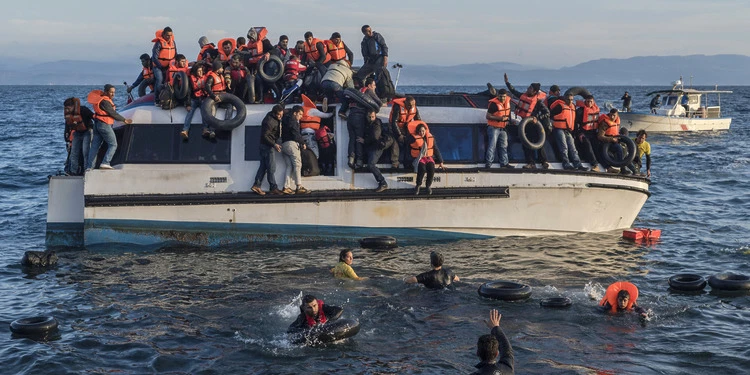
A growing debate over migration policy in Europe is highlighting sharply different approaches between Greece and Spain, with one country tightening enforcement and the other moving toward regularising undocumented migrants. The contrast reflects a broader tension across the European Union over whether migration should be managed primarily through deterrence or integration.
The discussion gained renewed attention following analysis by Shepherd Mutsvara of the University of Münster, who described how policies on the ground reveal deeper social and political choices about belonging, protection, and economic reality. His reflections point to the lived experiences of migrants as a key lens through which to understand policy decisions.
In Greece, the government is advancing a migration bill that would reinforce a hardline stance, particularly toward people whose asylum applications are rejected. Authorities argue that stricter rules — including detention, surveillance, and deportation measures — are necessary to manage arrivals and uphold immigration laws. Critics, however, warn that the proposed framework could entrench exclusion by making it harder for migrants to regularise their status, even in cases involving long-term residents with strong community ties.
Opposition figures such as Giorgos Psychogis and civil society groups have expressed concern that expanded detention powers and tighter permit rules could push more migrants into legal uncertainty. They also argue that linking residence permits to short periods of employment risks creating instability for workers in seasonal sectors, while restrictions on integration pathways may undermine long-term social cohesion.
By contrast, Spain is pursuing a regularisation programme expected to grant legal status to hundreds of thousands of undocumented migrants already living in the country. Officials, including migration minister Elma Saiz, have framed the initiative as a pragmatic response to labour shortages and demographic pressures, emphasising that bringing workers into the formal economy can boost tax revenues, reduce exploitation, and strengthen social inclusion.
Under Spain’s plan, applicants must meet conditions such as proof of residence, a clean criminal record, and evidence of employment, family ties, or vulnerability. Advocates say the policy recognises the reality that many migrants are already contributing to society and should be granted legal certainty rather than remaining in informal or precarious situations.
The divergence between Athens and Madrid underscores a central question facing Europe: whether migrants are primarily viewed as a security challenge or as potential members of society. While Greece’s approach prioritises deterrence in response to border pressures, Spain’s strategy leans toward integration as a way to manage migration sustainably.
As debates continue in Brussels and across member states, the contrasting paths of Greece and Spain illustrate how migration policy choices shape not only border management but also economic outcomes, social cohesion, and the everyday lives of millions of people across Europe.