
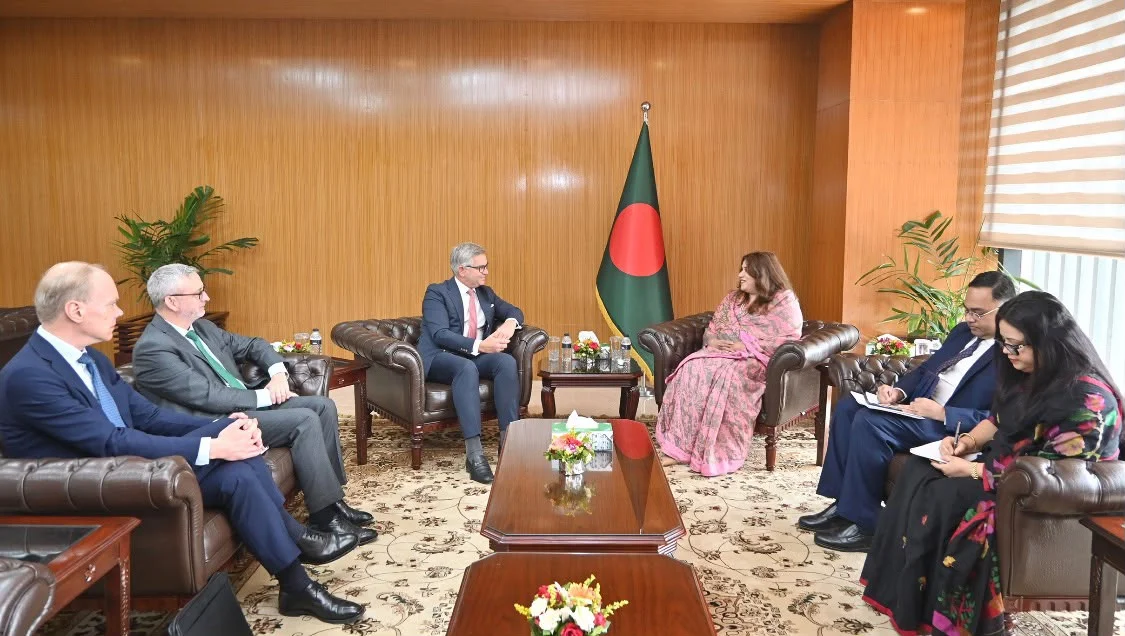
Bangladesh and the European Union have agreed to strengthen cooperation on migration management, with a focus on preventing irregular migration, combating human trafficking and migrant smuggling, and expanding legal employment opportunities for Bangladeshi workers in Europe.
The agreement was reached on Monday, October 12, during a meeting in Dhaka between EU Commissioner for Migration and Home Affairs Magnus Brunner and Bangladesh’s State Minister for Foreign Affairs, Shama Obaid Islam. EU Ambassador to Bangladesh Michael Miller also attended the meeting.
The discussions covered migration management, the return of migrants, human trafficking and efforts to dismantle criminal networks involved in migrant smuggling.
Shama Obaid Islam reaffirmed Bangladesh’s commitment to safe, orderly and regular migration. She urged the EU and its member states to create more opportunities for skilled Bangladeshi workers and professionals to enter European labour markets through legal channels.
She also called for practical labour mobility arrangements based on the actual needs of employers and economies. Such arrangements, often described as mobility corridors, could help connect Bangladeshi workers with jobs in Europe and encourage migration through regular pathways.
The minister said Bangladesh had adopted a National Action Plan for 2026–2030 to implement the Global Compact for Safe, Orderly and Regular Migration, an international framework aimed at improving cooperation on migration.
Brunner highlighted the EU’s Eastern Corridor Initiative, which seeks to prevent irregular migration through cooperation with relevant stakeholders, including countries migrants leave from and those they travel through.
Bangladesh expressed its willingness to work with the EU on the initiative. The country’s foreign affairs minister also outlined measures taken to combat document forgery and criminal networks linked to irregular migration.
However, Shama Obaid Islam stressed that enforcement alone would not address the problem. She argued that governments must also tackle the underlying reasons people resort to irregular routes while creating more opportunities for safe and legal migration.
Both sides agreed on the need for a coordinated approach to migration-related challenges and pledged to strengthen their cooperation.
The meeting also addressed broader Bangladesh-EU relations, including trade and investment, with Bangladesh reaffirming its interest in expanding economic ties with the bloc.
The discussions reflect efforts by Bangladesh and the EU to combine action against irregular migration with greater access to legal work opportunities for Bangladeshi nationals.