
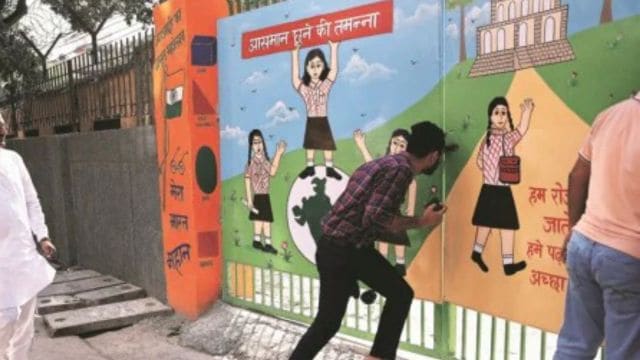
Schools under the Municipal Corporation of Delhi (MCD) have been instructed to identify children of illegal Bangladeshi migrants and ensure they are not issued birth certificates. This directive follows a recent order from the Delhi Lieutenant Governor’s Secretariat to intensify action against illegal immigrants from Bangladesh. The issue has sparked a political clash between the ruling Aam Aadmi Party (AAP) and the Bharatiya Janata Party (BJP) as Assembly elections approach.
The MCD has also mandated all its zones to remove encroachments by illegal Bangladeshi migrants and submit an action-taken report by December 31. According to the deputy commissioner’s order, municipal schools are required to take preventive measures during the admission process to identify and verify the status of illegal Bangladeshi migrant children.
AAP leaders have criticized the directive, claiming it targets the Purvanchali community, which includes migrants from eastern Uttar Pradesh and Bihar. AAP MP Sanjay Singh accused the BJP of using this order to humiliate and threaten Purvanchalis, who constitute around 42% of Delhi’s electorate and have significant influence in nearly half of the city’s 70 Assembly constituencies.
Singh also alleged that BJP leaders, including national president JP Nadda, have equated Purvanchalis with Rohingya and Bangladeshi migrants, further alienating the community. He highlighted a 2022 post by Union Minister Hardeep Singh Puri, accusing the BJP of housing Rohingyas in economically weaker section (EWS) flats in Bakkarwala, Delhi. Singh challenged the BJP to act against illegal migrants in known locations instead of targeting the poor.
However, Puri has previously clarified that the central government did not issue any directives to provide housing for illegal Rohingya immigrants. The BJP has denied the allegations, maintaining its stance on strict action against illegal migrants while rejecting claims of targeting specific communities.
This controversy highlights the intersection of migration and politics in Delhi, where the identification of illegal immigrants has become a contentious topic. The directive raises questions about its potential impact on vulnerable communities and the political narrative ahead of the elections.