
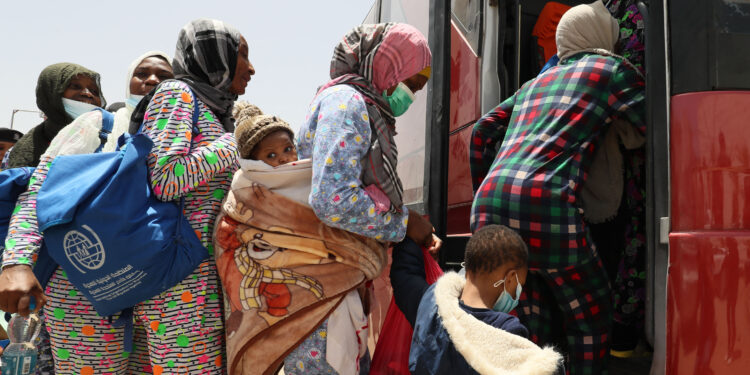
The European Union has agreed on a major policy change that will allow it to suspend trade preferences for countries that refuse to cooperate in returning their citizens who stay in Europe without permission. The decision came after long negotiations between EU institutions, as they reviewed the Generalised System of Preferences (GSP), which gives 65 developing countries easier access to the EU market.
The new rule means any country benefiting from the GSP scheme could lose these trade advantages if it does not help the EU return its nationals living irregularly in Europe. According to an EU Council statement, this is the first time migration cooperation has been directly linked to trade benefits. The deal comes at a time when several European countries are demanding stricter migration policies and faster deportations.
The European Commission welcomed the agreement, saying the GSP already includes conditions on human rights and environmental protection. Commission spokesman Olof Gill explained that the update simply adds a requirement for countries to show stronger cooperation on returning their citizens. The Commission will now have the authority—after consulting the Council and the European Parliament—to suspend trade benefits for countries that fail to meet their readmission obligations.
More than 20 countries have formal readmission agreements with the EU. These include Ethiopia, Guinea, Ivory Coast, Gambia, Niger, Nigeria, Ghana, Mali, Morocco, Bangladesh, Pakistan, and Sri Lanka. If these countries stop cooperating on migrant returns, they could be the first affected by the new policy. The European Commission said the measure is not meant to punish countries but to ensure fair and consistent migration management.
The Socialists and Democrats group in the European Parliament noted that their efforts ensured readmission would only be used as a “last resort.” They stressed that the new rule includes strong safeguards and strict procedures to prevent unfair punishment of developing countries. They warned that the original proposal from the Commission would have made trade suspensions much easier.
The revised GSP framework also introduces new rules requiring countries to follow more international agreements on labour rights and human rights. The EU will also have a faster process to suspend trade benefits when a country commits serious violations related to climate change, environmental protection, or human rights. Other changes include new rules for countries that will soon move out of the “least developed” category, and a lower threshold for suspending trade benefits in specific sectors such as rice.
To address concerns from Italy and Spain, the EU also added a safeguard for rice imports. If rice imports suddenly increase, the EU may temporarily apply regular World Trade Organization (WTO) tariffs to protect the European market. The Renew Europe Group said this safeguard will only be used when necessary and with full fairness to least developed countries.
The agreement will now go to the European Parliament and the EU Council for final approval. If confirmed, the new GSP rules will officially take effect on January 1, 2027, marking a major shift in how Europe connects trade policy with migration cooperation.
Does this mean countries will automatically lose trade benefits?
No. The EU says trade suspensions will only happen after a detailed review and will be used as a last resort if a country refuses to cooperate on migrant returns.