Close Menu
Migrant Affairs
    Trending News

    EU Opens Contact with Taliban Over Migrant Returns

    October 20, 2025

    EU Strengthens Europol Role to Fight Migrant Smuggling and Trafficking

    September 26, 2025

    EU Border Policies Under Scrutiny After Deadly Migrant Shipwreck

    March 1, 2024

    EU Records Highest-Ever Number of Asylum Applications in 2023

    February 28, 2024

    Doctors Without Borders Condemn European Union Migration Policies

    February 24, 2024

    UK gets EU intelligence on human trafficking

    February 23, 2024
    Facebook X (Twitter) Instagram
    Facebook X (Twitter) Instagram
    Migrant Affairs
    Subscribe
    • Home
    • About
    • News
    • Features
    • Contact
    • Privacy Policy
    • Terms and Conditions
    Migrant Affairs
    Home » Europe migration policy debate highlights stark divide between Greece and Spain
    Greece

    Europe migration policy debate highlights stark divide between Greece and Spain

    February 18, 2026Updated:March 3, 20263 Mins Read
    Facebook Twitter LinkedIn Copy Link WhatsApp
    Europe migration policy Greece Spain
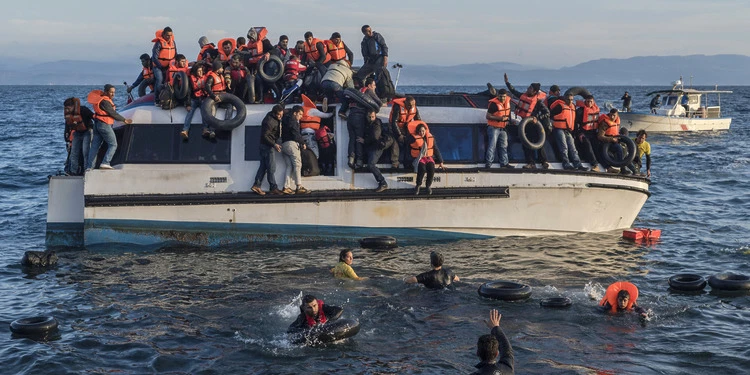
    Syrian and Iraqi refugees arrive at Skala Sikamineas, Lesbos, Greece, October 2015. Photo Credit: Ggia. Source: Impakter
    Share
    Facebook Twitter LinkedIn Copy Link WhatsApp

    A growing debate over migration policy in Europe is highlighting sharply different approaches between Greece and Spain, with one country tightening enforcement and the other moving toward regularising undocumented migrants. The contrast reflects a broader tension across the European Union over whether migration should be managed primarily through deterrence or integration.

    The discussion gained renewed attention following analysis by Shepherd Mutsvara of the University of Münster, who described how policies on the ground reveal deeper social and political choices about belonging, protection, and economic reality. His reflections point to the lived experiences of migrants as a key lens through which to understand policy decisions.

    In Greece, the government is advancing a migration bill that would reinforce a hardline stance, particularly toward people whose asylum applications are rejected. Authorities argue that stricter rules — including detention, surveillance, and deportation measures — are necessary to manage arrivals and uphold immigration laws. Critics, however, warn that the proposed framework could entrench exclusion by making it harder for migrants to regularise their status, even in cases involving long-term residents with strong community ties.

    Opposition figures such as Giorgos Psychogis and civil society groups have expressed concern that expanded detention powers and tighter permit rules could push more migrants into legal uncertainty. They also argue that linking residence permits to short periods of employment risks creating instability for workers in seasonal sectors, while restrictions on integration pathways may undermine long-term social cohesion.

    By contrast, Spain is pursuing a regularisation programme expected to grant legal status to hundreds of thousands of undocumented migrants already living in the country. Officials, including migration minister Elma Saiz, have framed the initiative as a pragmatic response to labour shortages and demographic pressures, emphasising that bringing workers into the formal economy can boost tax revenues, reduce exploitation, and strengthen social inclusion.

    Under Spain’s plan, applicants must meet conditions such as proof of residence, a clean criminal record, and evidence of employment, family ties, or vulnerability. Advocates say the policy recognises the reality that many migrants are already contributing to society and should be granted legal certainty rather than remaining in informal or precarious situations.

    The divergence between Athens and Madrid underscores a central question facing Europe: whether migrants are primarily viewed as a security challenge or as potential members of society. While Greece’s approach prioritises deterrence in response to border pressures, Spain’s strategy leans toward integration as a way to manage migration sustainably.

    As debates continue in Brussels and across member states, the contrasting paths of Greece and Spain illustrate how migration policy choices shape not only border management but also economic outcomes, social cohesion, and the everyday lives of millions of people across Europe.

    deterrence vs integration EU migration debate Europe migration policy Greece migration law immigrants Immigration migrant migrant integration Europe migrants migration migration news Europe migration reform EU Shepherd Mutsvara analysis Spain migrant regularisation undocumented migrants Europe
    Share. Facebook Twitter LinkedIn Copy Link WhatsApp

    Related Posts

    US Considers Detaining Cuban Migrants at Guantánamo Amid Growing Crisis

    April 8, 2026

    Delhi Expands LPG Access with Special Camps for Migrant Workers

    April 8, 2026

    Morocco Records Drop in Irregular Migration Attempts as Routes Shift in 2025

    April 8, 2026

    Comments are closed.

    Top Posts

    Organizations Supporting Migrants and Refugees Worldwide

    Germany’s National Election 2025: Political Party Ideologies on Migration and Migrants

    The Impact of Social Media on Migrant Advocacy and Awareness

    Top Scholarships and Educational Opportunities for Migrants and Refugees in 2026

    Don't Miss

    Migrant Women in Germany Face Violence Risks Despite Strong Support Systems

    March 27, 20263 Mins ReadBy RACHAEL ADEEGBE

    Migrant women in Germany are facing serious risks of gender-based violence, even though the country…

    Read More

    Berlin Justice Senator Halts Migrant Hiring Quotas Over Constitutional Concerns

    March 17, 2026

    Germany Plans to End Funding for Independent Asylum Counseling

    March 16, 2026

    Germany Expands Skilled Migration and Research on Migrant Employment

    March 3, 2026

    Germany Approves Tougher Asylum Laws to Implement EU Migration Reform

    February 27, 2026

    Germany Joins EU Push to Set Up Migrant Return Hubs in Third Countries

    January 23, 2026
    RSS News Around
    Stay In Touch
    • Facebook
    • Twitter
    • LinkedIn
    • WhatsApp
    RSS More News
    • Germany news: Lufthansa cabin crew to strike on Friday, UFO trade union says
    • One in five young Germans plan to leave the country
    • Germany news: Minister floats fare-dodging decriminalization
    • Germany's new religious diversity
    • Young German men refusing military service
    About Us

    A news and information site documenting and sharing relevant and helpful stories and resources for and about Migrants.

    Email Us: info@migrantaffairs.info

    Facebook X (Twitter) WhatsApp
    Top Stories

    UK Home Office Faces Lawsuit Over £462m Migrant Site Contract

    April 8, 2026

    How One Woman Is Driving Migrant Health Services Forward in Ghana

    April 6, 2026

    Trump Administration Accused of Using Migrant Children to Detain Family Members

    April 3, 2026
    RSS Business News
    • Norway's Telenor faces lawsuit for giving junta data from its customers in Myanmar
    • Will AI doom office space to history?
    • Can small nuclear reactors solve Europe's energy woes?
    • Wealth tax: Why are countries afraid to tax the ultrarich?
    • How US 'Liberation Day' tariffs reshaped global trade
    RSS Expat Jobs
    Migrant Affairs
    • Home
    • About
    • News
    • Features
    • Contact
    • Privacy Policy
    • Terms and Conditions
    © 2026 Migrant Affairs

    Type above and press Enter to search. Press Esc to cancel.