
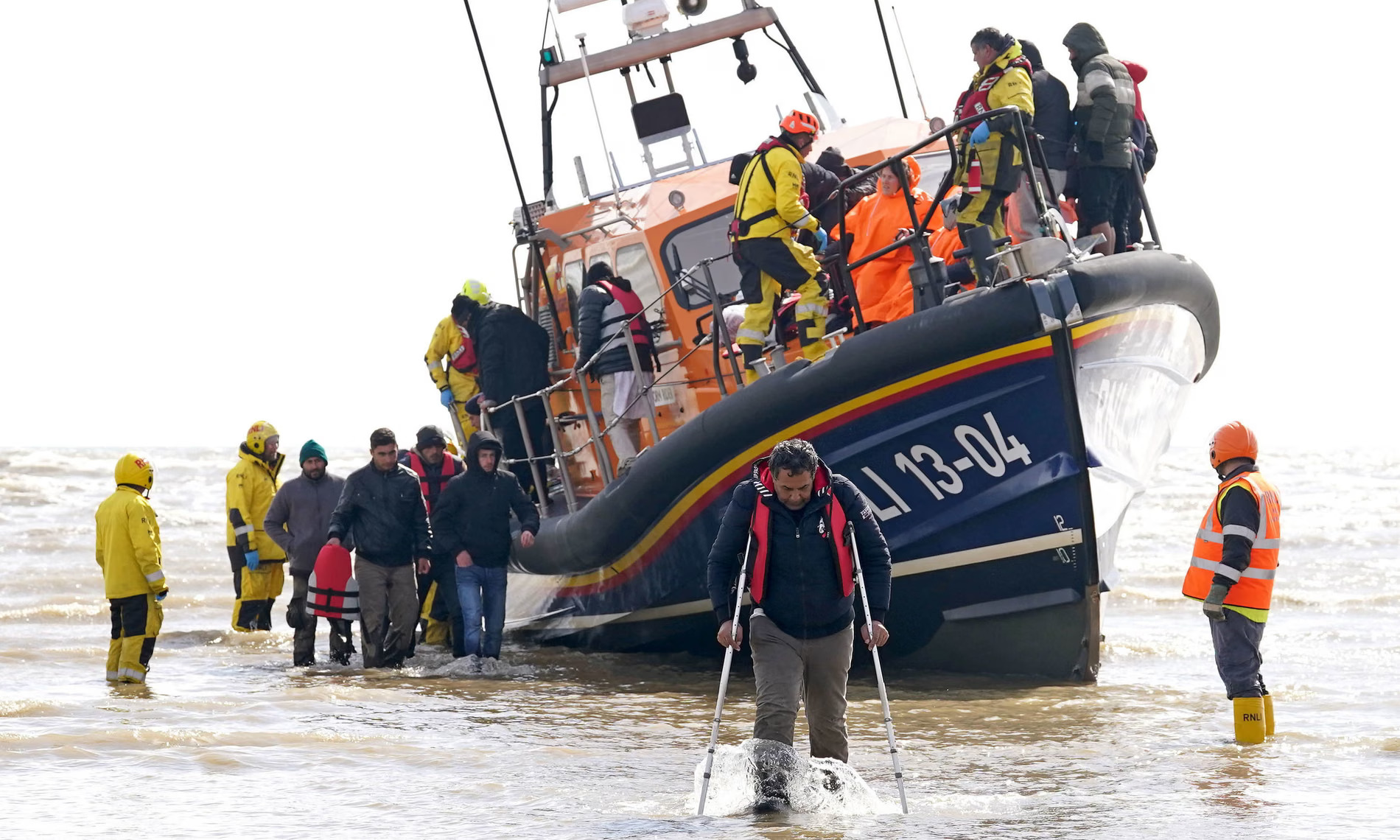
French authorities have carried out their first on-water interception of a suspected migrant smuggling boat as part of new efforts to reduce small boat crossings to the UK. The operation took place on Saturday on the Aa canal in Gravelines, near Calais, a known hotspot for Channel crossings.
During the operation, officers boarded an inflatable “taxi boat” believed to be heading out to collect migrants before moving towards the open sea. Images shared by the BBC showed the dinghy being towed back to the dock by a police vessel, with several men on board who were later detained. French maritime authorities confirmed there is an ongoing judicial investigation.
The interception follows a new agreement reached between France and the UK in July 2025, after talks between French President Emmanuel Macron and UK Prime Minister Sir Keir Starmer. Under the deal, French police are now allowed to intervene on the water under strict conditions, a major change from previous practice.
Until now, French officers mainly stopped boats on beaches, saying it was too dangerous to intervene once vessels were in the water. Smuggling groups took advantage of this by using “taxi boats”, which enter the water away from busy beaches and travel along the coast to pick up migrants already wading out. Official French documents estimate that this method had an 81 percent success rate in 2025.
Under the new rules, gendarmes can stop boats before migrants board them, but are not allowed to intervene once boats are fully loaded. Authorities say this approach is meant to reduce the risk of accidents and deaths during crossings.
Channel crossings remain a major concern for both countries. In 2025, 41,472 people reached the UK by small boat, up from 36,566 in 2024, though still below the 2022 peak. Between January 1 and January 18, 2026, 658 people were recorded making the journey.
Most people arriving by small boat apply for asylum in the UK. Between October 2024 and September 2025, more than 110,000 asylum applications were made, with small boat arrivals accounting for about 41 percent. The United Nations has repeatedly warned about the dangers of overcrowded crossings, with dozens of deaths recorded in recent years.
The interception also comes as the UK and France continue testing the “one in, one out” returns scheme. Under this deal, migrants arriving in the UK by small boat can be returned to France in exchange for the UK accepting asylum seekers through legal routes. At the same time, the UK has introduced new powers to seize mobile phones and SIM cards from migrants to gather intelligence on smuggling networks, a move that has raised privacy concerns.
Why is France now stopping boats on the water?
France changed its approach after an agreement with the UK, allowing officers to intercept boats before migrants board them, in order to reduce successful Channel crossings and disrupt smuggling networks.