
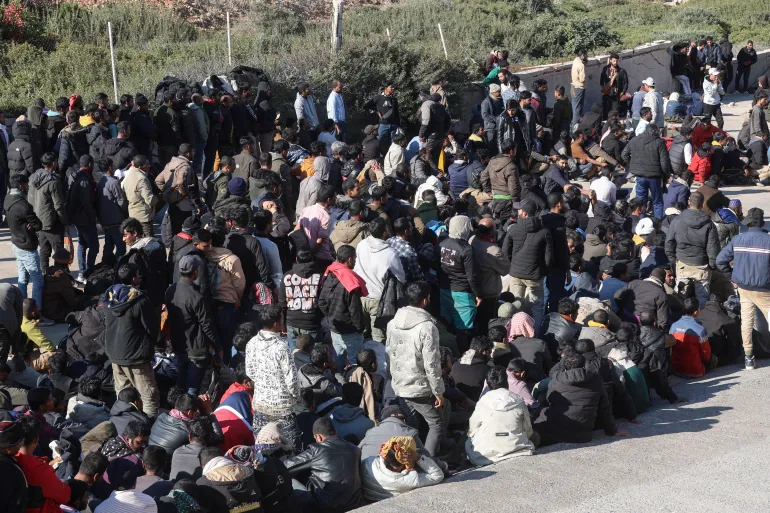
Greece has announced plans to build three new migrant centers in Crete as part of a broader effort to tighten migration controls. The decision comes after record numbers of migrants arrived on the island in 2025, creating pressure on local services and reception facilities. The proposal is included in a migration bill expected to be approved by parliament later this week.
Migration Minister Thanos Plevris introduced an amendment to the bill that provides for one permanent migrant facility and two temporary detention centers on Crete. The permanent center will be built on the island, while the temporary facilities are planned for Heraklion and Chania. Authorities have not yet announced when the centers will open.
Officials say the move is necessary because migration patterns have shifted. In previous years, most migrants arriving in Greece landed on Aegean islands after departing from Turkey. However, in 2025, nearly half of all migrant arrivals in Greece were recorded in Crete and the nearby island of Gavdos, with many boats departing from Libya. This change has made Greece migrant centers in Crete a key part of the country’s new strategy.
The increase in arrivals led the government last year to temporarily suspend asylum processing for migrants who arrived via Crete, a decision that drew criticism from human rights groups. Processing has since resumed, but many applications from 2025 are still pending.
Plevris said the new facilities are also intended to act as a deterrent. Under the proposed system, migrants whose asylum claims are considered unlikely to succeed could be held in administrative detention while their applications are reviewed. The government argues this will help speed up procedures and reduce irregular migration.
The migration bill also includes faster returns for those whose asylum claims are rejected. Authorities say rejected applicants could be sent back to their home countries or possibly to third countries under wider European Union return plans. Greece has expressed interest in working with partners to establish such facilities outside the EU.
In addition, Greece is strengthening cooperation with countries of origin and transit. Plevris said talks are ongoing with Egypt, Bangladesh, and Pakistan to improve deportation procedures and voluntary return programs. International organizations such as the International Organization for Migration (IOM) and the UN refugee agency UNHCR are also expected to be involved.
Greece has also expanded cooperation with Libya and Turkey to reduce migrant departures. The government says closer coordination with authorities in these countries is part of a broader effort to manage migration flows before boats reach Greek shores.
Why is Greece building new migrant centers in Crete?
The government says the sharp rise in arrivals from North Africa has overwhelmed local systems. The new facilities are meant to improve processing, increase detention capacity, and strengthen migration control on the island.
The plan to establish Greece migrant centers in Crete highlights the country’s shift toward stricter migration management, even as debates continue across Europe about balancing border control with human rights protections.