
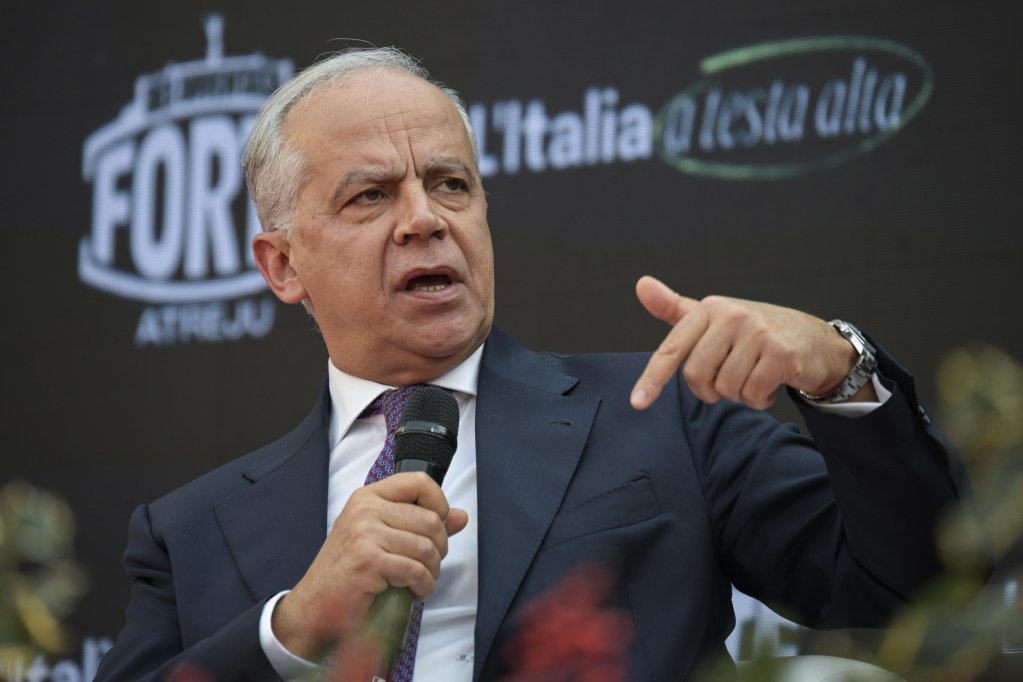
Italy’s Interior Minister, Matteo Piantedosi, says new European Union migration regulations will allow countries to process asylum claims and deport migrants within 28 to 30 days, instead of the years it currently takes.
Speaking on December 13 at the Atreju political event in Rome, organised by the ruling party Fratelli d’Italia, Piantedosi said the new rules mark a major turning point in how Europe handles irregular migration.
According to him, countries that first receive migrants, such as Italy and Greece, will now be able to quickly decide who qualifies for asylum and who should be expelled. He said this would prevent people from abusing the asylum system for reasons not linked to war or persecution.
“Democratic countries must protect people fleeing real danger,” Piantedosi said, “but they also have a duty to control their borders.”
He explained that under the current system, migrants are often received first, while complex legal processes delay decisions for years. The new EU framework, he said, will reverse this approach by prioritising fast checks and decisions.
Piantedosi also criticised what he described as “unrealistic court rulings” that block deportations. He gave examples of cases where migrants were allowed to stay after claiming minor personal fears, which he said weakened border control efforts.
The minister said the new EU regulations would also support Italy’s controversial Albania migrant processing model, which allows some migrants rescued at sea to be transferred to centres outside Italy while their cases are reviewed.
He dismissed criticism that the Albania plan had failed, saying releases happened because of court decisions, not policy flaws. In some cases, he said, migrants returned to Italy after release and later committed crimes.
Piantedosi also spoke about Lampedusa, describing it as an example of past hypocrisy in migration policy, where migrants were welcomed at the border but then left without proper support or control.
He praised EU Commissioner Magnus Brunner, saying Europe has changed direction since Brunner took office and is now more united in tackling irregular migration.
According to Piantedosi, the approval of the new EU migration regulations last week shows that Europe is moving toward stricter, faster, and more coordinated migration management.