
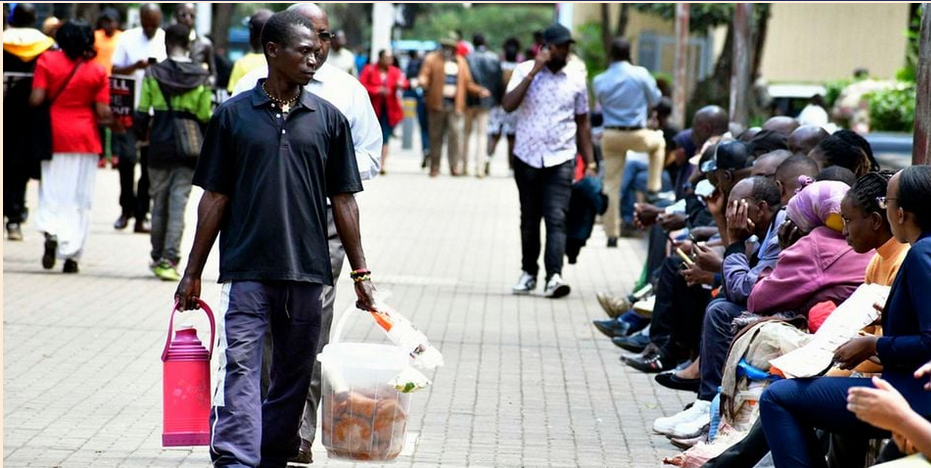
Burundi’s growing wave of migrants fleeing to Kenya has drawn fresh attention to the worsening economic crisis in one of the world’s poorest nations. For years, Kenyan companies operating in Burundi continued business as usual, even as Burundians crossed the border in search of safety and survival. But the growing number of migrants now peddling goods on Nairobi’s streets has forced investors to take notice.
One of the biggest shocks came when Diamond Trust Bank (DTB) announced it was pulling out of Burundi after sixteen years. The bank, listed on the Nairobi Securities Exchange, said it would sell its 83.67 percent stake in DTB Burundi to a consortium led by an existing minority shareholder. According to DTB Group CEO Nasim Devji, the board considered the offer fair and reflective of the bank’s investment value.
DTB was the first Kenyan bank to enter Burundi in 2009, starting with a single branch in Bujumbura. However, worsening economic conditions have made operations difficult. KCB Group, another Kenyan lender in Burundi, is also reviewing its future in the market. CEO Paul Russo said the group is re-evaluating its presence in Burundi, South Sudan, and the Democratic Republic of Congo, warning that Burundi could soon face hyperinflation as elections approach.
Kenyan banks have expanded across the East African region, but Burundi remains a challenging environment. Though it joined the East African Community (EAC) in 2007, the country has struggled to attract investment. Data from the Central Bank of Kenya shows that Burundi’s contribution to regional subsidiaries’ pre-tax profit fell sharply from 3.84 percent in 2021 to just 1.2 percent last year. In contrast, neighboring Rwanda’s share increased to nearly 23 percent.
Economic growth in Burundi remains the lowest in the EAC, at only 2.2 percent in 2024. The inflation rate, though slightly lower in July 2025 at 38.9 percent, still points to severe hardship. “High inflation suggests there are significant economic problems there,” said Charlie Robertson, head of macro strategy at FIM Partners. Shortages of fuel, foreign exchange, and power have crippled industries and increased the cost of living, pushing more Burundians to flee the country.
According to analysts, Burundi’s long history of civil unrest, corruption, and political instability has left its economy in ruins. The late President Pierre Nkurunziza’s controversial third-term bid in 2015 triggered mass protests, a failed coup, and international sanctions from the United States and European Union. Though current President Évariste Ndayishimiye has made efforts to rebuild ties with global partners, recovery remains slow.
Between 2020 and mid-2025, Burundi surpassed the Democratic Republic of Congo as the top non-bordering country sending asylum seekers to Kenya. Many migrants now struggle to survive in Nairobi, selling goods on the streets while their homeland faces shortages of basic supplies. As DTB exits and KCB reassesses, other Kenyan companies like Davis & Shirtliff are taking calculated risks, recently opening a new branch in Bujumbura amid cautious optimism.
Why are Burundians migrating to Kenya?
Many Burundians are leaving due to hyperinflation, political uncertainty, and severe shortages of basic goods. Kenya remains an accessible destination within the East African Community, offering better economic opportunities and relative stability.
Despite these challenges, there’s still hope for change. Some sanctions have been lifted, and the Burundian government is working to rebuild trust with international institutions like the IMF. Whether these reforms can stabilize the economy and slow the outflow of migrants remains uncertain, but for now, the effects of Burundi’s crisis are being felt well beyond its borders.