
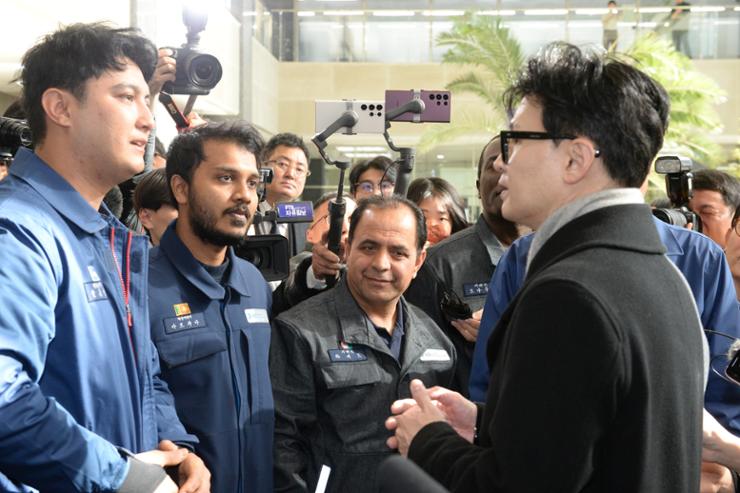
Tensions are rising in South Korea’s shipbuilding industry as workers protest the government’s decision to maintain an increased visa quota for migrant laborers. The temporary policy, allowing migrant workers to comprise up to 30% of the full-time workforce in shipyards, has sparked calls for a rollback to the previous 20% limit.
Labour unions representing workers from eight major shipyards have criticized the government’s move, accusing authorities of prioritizing cheap labour over improved working conditions for domestic employees. The unions announced plans to hold a press conference, urging both the government and shipbuilders to reduce their reliance on migrant labour and address workplace issues.
The policy, first implemented two years ago, was extended as part of the government’s 2025 economic strategy to address labour shortages in the shipbuilding sector. Industry insiders argue that the expanded visa quota is essential to meet the growing demand for shipbuilding, especially as the U.S. has expressed interest in collaborating on the maintenance, repair, and overhaul (MRO) of naval vessels.
The controversy gained traction following statements by Prime Minister Han Duck-soo last November, where he hinted at increasing the E-7 visa quota for shipyard workers. His remarks coincided with a phone call between U.S. President-elect Donald Trump and President Yoon Suk Yeol, discussing potential partnerships with Korean shipbuilders.
Despite the unions’ resistance, labour activists and industry leaders have defended the policy. Activist Lim Jun-hyung criticized the unions’ stance as divisive, warning that reducing the visa quota could push migrant workers into more precarious, undocumented jobs. “This campaign undermines solidarity between Korean and foreign workers,” Lim said, emphasizing the need for unity in advocating better labour conditions for all.
Shipbuilders, on the other hand, support the policy, citing its benefits in addressing labour shortages and boosting efficiency. An industry insider noted that migrant workers could handle simpler, repetitive tasks during naval MRO projects, while another highlighted the flexibility it offers subcontractors to manage the surge in shipbuilding orders.
The unions, however, remain firm in their opposition. In a recent statement, they accused the government of exploiting migrant labour for dangerous, low-paying jobs and called for improved living conditions for foreign workers. Over 5,000 workers signed a petition last month, demanding the government abandon the visa quota expansion.
As debates continue, the issue highlights the complex balance between meeting industry demands, protecting workers’ rights, and fostering solidarity among diverse labour forces.