
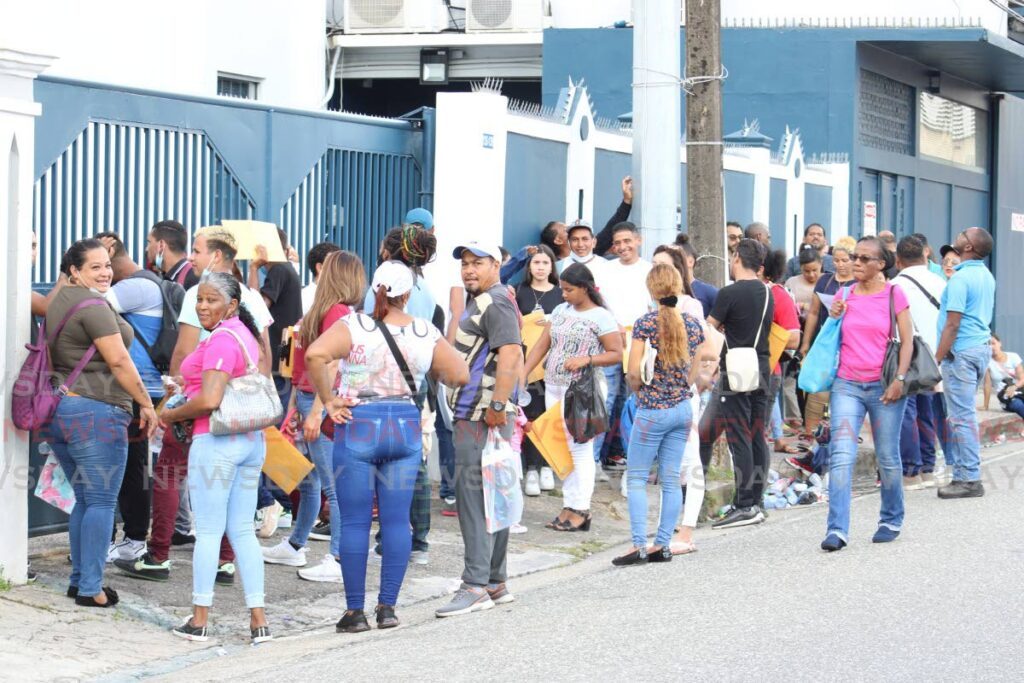
A leading migrant support organisation in Trinidad and Tobago has welcomed the government’s decision to allow all migrants in the country to register for regularisation. The move has been described as a positive and important step for migrants living in uncertainty.
Andreina Briceño Ventura-Brown, head of the La Casita Hispanic Cultural Centre, said the announcement brings hope to many migrants, especially Venezuelans. She explained that the new registration programme will allow migrants to live and work legally in Trinidad and Tobago.
The Ministry of Homeland Security announced that migrant registration cards will be issued between January 1 and September 30, 2026. The registration applies not only to migrants who were previously documented, but also to those who were never regularised.
Ventura-Brown said the announcement has helped reduce fear and confusion within the migrant community. Many migrants, she explained, often feel uneasy whenever immigration issues are discussed, but this decision has provided clarity and reassurance.
She added that migrants believe the registration could help children access education and open doors for families to live with dignity. According to her, many migrants are relieved that the government has considered their situation and is willing to support them.
The La Casita leader also noted that the registration is not limited to Venezuelans alone. Migrants from more than 14 different nationalities, including Cubans, Dominicans, and Jamaicans, are expected to benefit from the programme.
She praised the government for recognising the importance of knowing who lives in the country, saying the policy could improve both public safety and national security. The government has said the registration will help with data collection while allowing the deportation of migrants who break the law or pose security risks.
Ventura-Brown said the decision allows migrants to live with dignity instead of constantly being in survival mode. She believes regularisation can help migrants contribute positively to the economy, as many already work and support local businesses.
Although the announcement was made online rather than through a press conference, she said migrants closely follow the Ministry of Homeland Security’s official platforms and viewed the online notice as meaningful and official.
She admitted that some migrants remain cautious due to mixed messages from authorities in the past, but said the current decision shows an effort by the government to understand the reality on the ground.
Ventura-Brown concluded that migration should be seen as an opportunity rather than a problem. She expressed hope that with support from NGOs, consulates, and organisations, the registration process will bring stability and positive change for both migrants and Trinidad and Tobago.