
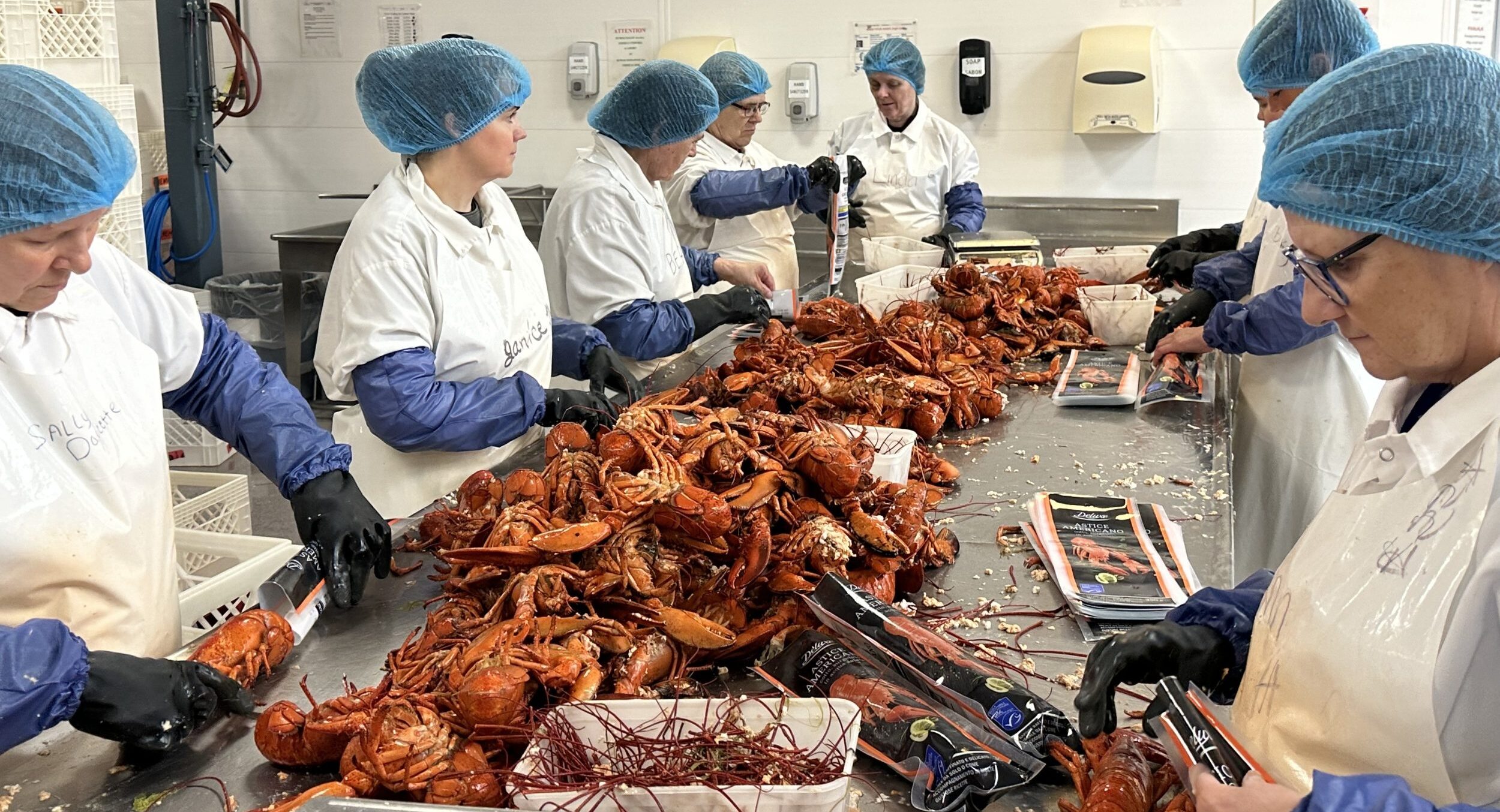
Migrant workers in Prince Edward Island’s (PEI) seafood industry are facing growing uncertainty as trade tariffs and environmental problems slow down production. These challenges are reducing working hours for many employees, leaving some without jobs.
Hundreds of temporary foreign workers, who play a key role in seafood processing, are struggling with fewer shifts. The seafood industry is an important part of Canada’s economy, but it is finding it harder to stay competitive in global markets due to higher export tariffs and unpredictable environmental changes.
At plants like Royal Star Seafoods in Tignish, workers who process lobsters for packaging are feeling the slowdown directly. Industry leaders say rising tariffs are cutting profits, while warmer waters and lower catches are reducing the amount of seafood available for processing.
For migrant workers, this impact is especially hard. Many depend on steady income to send money home, pay off recruitment fees, and meet Canada’s high cost of living. With fewer hours available, workers are finding it difficult to cover rent, food, and transportation costs.
Advocates in PEI argue that migrant workers are again carrying the biggest burden of political and economic struggles. Because their work visas are tied to a single employer, they cannot easily move to other jobs when hours are cut. This leaves them with limited choices in times of crisis.
Community groups are calling for new protections, such as guaranteed minimum work hours, better job mobility for foreign workers, and emergency financial support during industry downturns. They believe these measures are necessary to prevent workers from falling into poverty or being forced to return home before finishing their contracts.
Despite the problems, PEI’s seafood industry still relies heavily on migrant labour. Workers from countries like the Philippines, Mexico, and Thailand make up a large part of the processing workforce, often taking jobs that local workers avoid because of the difficult and seasonal nature of the work.
Industry experts warn that if conditions continue to worsen, the entire seafood supply chain could be disrupted, affecting exports and the province’s economy. Many say the best way forward is to combine fair treatment for workers with stronger policies to protect the industry from global trade and environmental pressures. For now, migrant workers remain in a cycle of uncertainty, hoping for more stability in PEI’s seafood industry.