
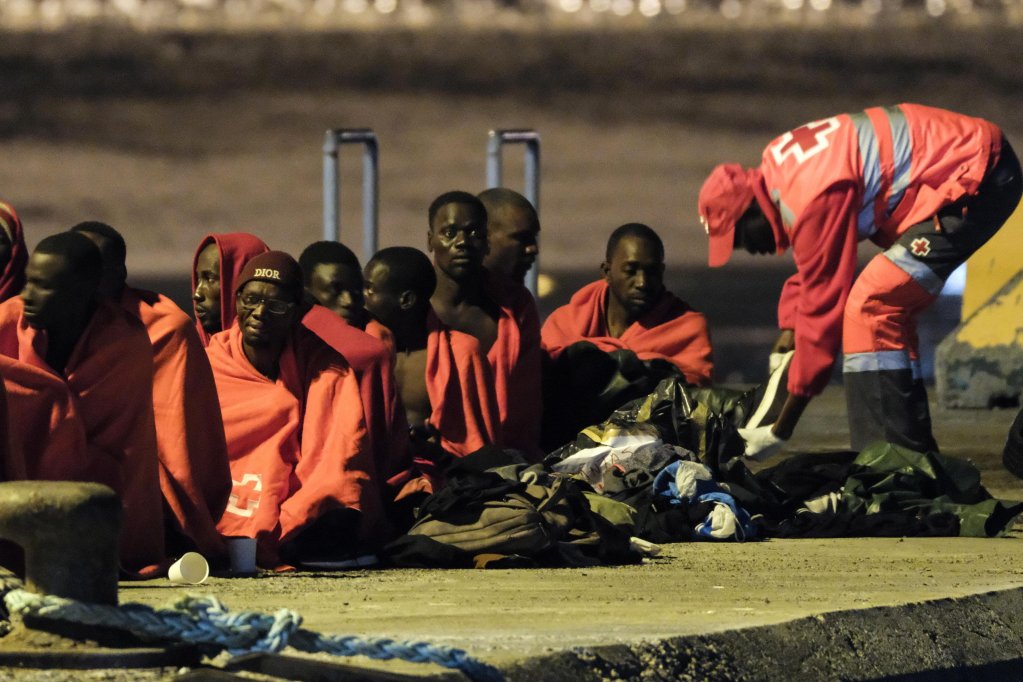
One migrant has died, and six others were taken to the hospital after a boat carrying 143 migrants was rescued off the Canary Islands. The vessel was intercepted on January 6 about 26 kilometres off the coast of La Gomera, the smallest and most remote island in the archipelago, according to emergency services.
Rescue teams recovered one person dead from the boat, while six migrants were rushed to the hospital with serious symptoms of hypothermia. Among those hospitalised were three minors, highlighting the vulnerability of children and teenagers on dangerous sea journeys.
Officials said the boat was carrying 143 people of sub-Saharan origin. At least 72 of them were adolescents aged between 16 and 17, and eight were women. The high number of young people on board has raised fresh concerns about the risks faced by minors attempting to reach Europe by sea.
The migrants were rescued by Spain’s Maritime Rescue service and the Civil Guard. They were brought to the port of San Sebastián de La Gomera, where Red Cross volunteers provided immediate assistance, including medical checks, warm clothing, and food.
According to Spain’s Interior Ministry, irregular migrant arrivals dropped by about 40 percent in 2025, the lowest level since 2019. Arrivals along the Canary Islands route fell by around 60 percent, largely due to cooperation agreements between Spain and African countries such as Gambia, Senegal, and Mauritania.
Despite the overall decline, migration pressure has increased in other areas. As of December 15, around 35,935 migrants had reached Spain’s shores by sea, with more arrivals recorded in Ceuta and Melilla and along the Algerian route to the Balearic Islands.
Just days earlier, on January 5, more than 20 sub-Saharan migrants entered Ceuta by scaling the border fence or swimming into the Spanish enclave, despite bad weather conditions. Many were later assisted by the Red Cross and taken to temporary reception centres.
Why do many migrants use the Canary Islands route?
Many migrants choose the Canary Islands route in the hope of reaching Spain, despite it being long and dangerous, because other routes into Europe are heavily restricted.