
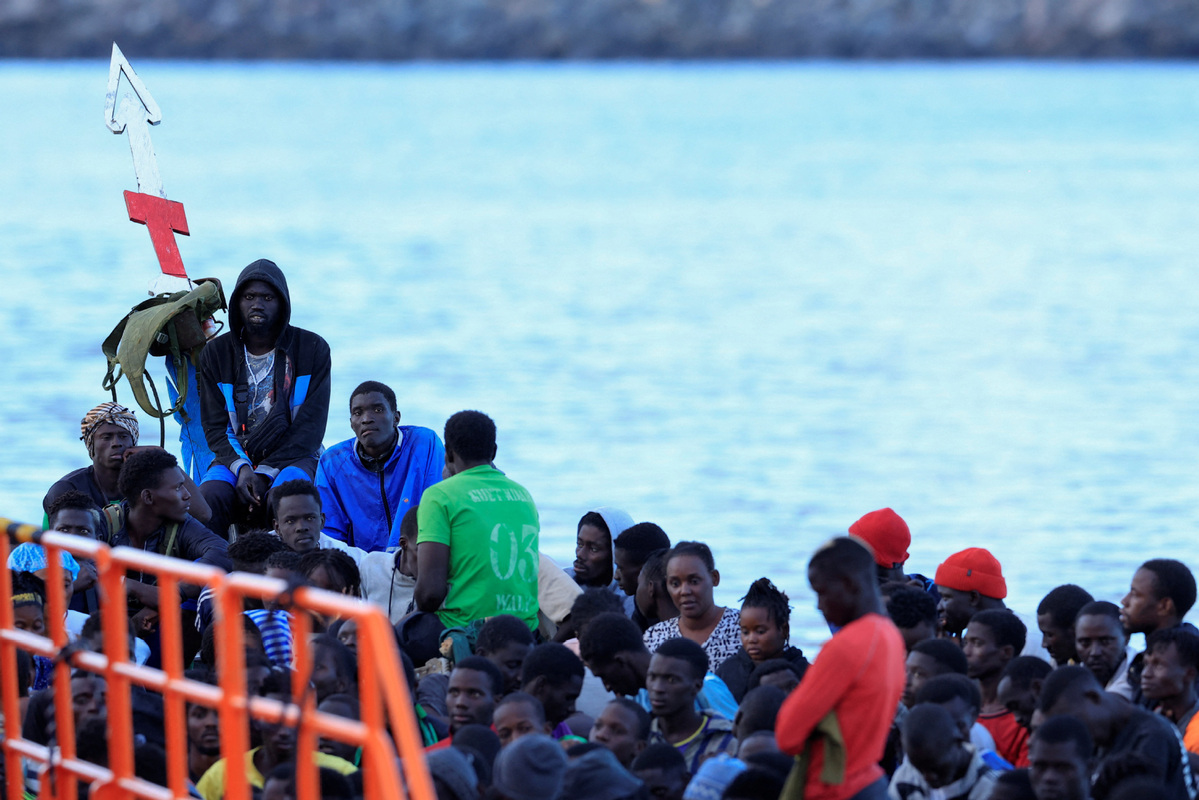
Rescue services in Spain have picked up more than 200 migrants traveling in small boats near the Balearic Islands in the Mediterranean Sea. The rescues took place between Tuesday and the early hours of Wednesday after several boats attempted the journey.
Authorities intercepted at least ten small boats over the two days. Reports said that 54 migrants arrived early Wednesday morning, including a group rescued about 44 miles from Ibiza. Around 15 others were later found near a pier on Formentera after coming ashore.
Earlier, Spain’s news agency EFE reported that 156 migrants arrived on Tuesday. Most were from North African countries, with others coming from sub-Saharan Africa. Another boat carrying 24 people was spotted late Tuesday near Mallorca.
The latest arrivals followed earlier landings, including 86 migrants who reached the islands on Monday. Official data shows that at least 621 migrants have arrived on the Balearics since the start of 2026, highlighting steady movement along this route.
While crossings toward the Balearic Islands have increased, attempts to reach the Canary Islands in the Atlantic have fallen. This trend is linked to cooperation between Spain, the European Union, and West African countries such as Senegal, Mauritania, and Morocco aimed at tightening coastal controls.
However, some migrants are now leaving from countries farther south, like Gambia and Guinea, to avoid patrols, making journeys longer and riskier. Many spend days at sea facing strong winds, currents, and limited supplies.
Survivors often report seeing abandoned boats drifting in the ocean and say that engines sometimes fail before reaching land. Limited aerial surveillance over the vast Atlantic makes it difficult to detect vessels in distress quickly.
NGOs, including Caminando Frontera,s warn that thousands of migrants continue to die trying to reach Spain. The group estimates that more than 3,000 people died on migration routes to Spain in 2025, showing the ongoing human cost of dangerous sea crossings.