
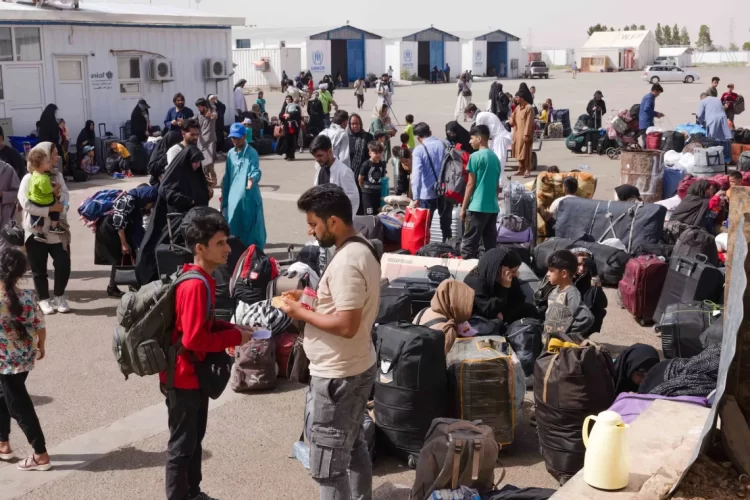
More than 370 Afghan migrant families returned to Afghanistan on Monday, January 19, 2026, according to Taliban-controlled media reports. The returns reflect a continuing wave of migration back to Afghanistan, as families leave neighbouring countries such as Iran and Pakistan.
The Taliban-run Bakhtar News Agency provided details of the returnees, reporting that one family crossed via Pul-e Abrasham in Nimroz, two families through Islam Qala in Herat, 31 families via Spin Boldak in Kandahar, 330 families through Torkham in Nangarhar, and nine families via Bahramcha in Helmand.
The United Nations has raised concerns over the welfare of returnees, noting that only 11 percent are employed. Low employment rates increase the economic strain on families who have already faced years of hardship abroad.
This movement follows a similar influx just two days prior, when around 400 Afghan families also returned home. In total, the UN reported that 2.8 million Afghan migrants returned to Afghanistan from Iran and Pakistan in 2025, underlining the scale of the migration challenge.
Experts warn that while the returns may ease migration pressure in neighbouring countries, the lack of job opportunities and essential services in Afghanistan presents serious reintegration challenges. Humanitarian organizations continue to call for international support to help returning families access housing, education, and employment opportunities.
The recent returns demonstrate both the resilience of Afghan migrant families and the pressing need for coordinated efforts to ensure safe and sustainable reintegration. With ongoing instability and limited infrastructure, Afghan migrant families remain among the most vulnerable populations in the region.