
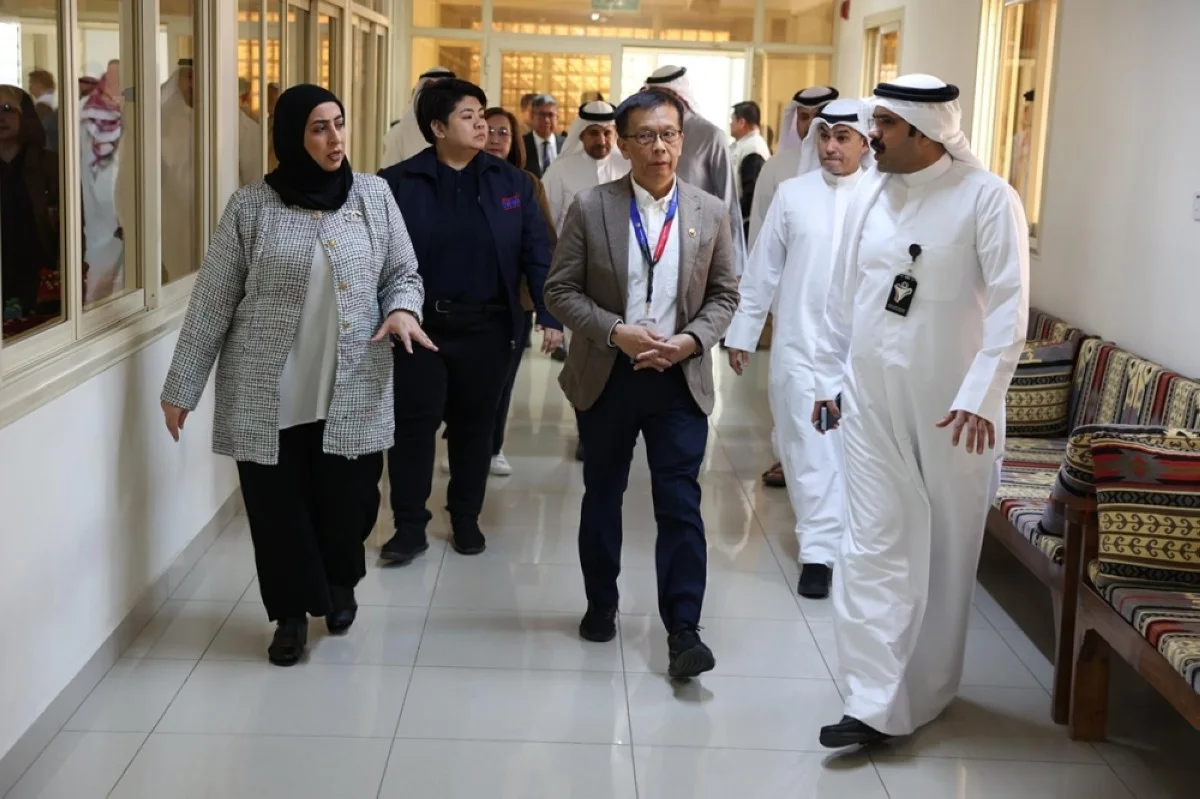
The Secretary of the Philippines Department of Migrant Workers, Hans Leo Cacdac, has visited a shelter for expatriate workers in Kuwait and praised the care and support offered to female migrants staying there. The visit took place on Saturday at the shelter located in Jleeb Al-Shuyoukh.
During the visit, Cacdac was welcomed by Rabab Al-Ossaimi, the acting head of Kuwait’s Public Authority of Manpower. She explained the legal, social, and rehabilitation services provided to women housed at the centre, many of whom are domestic workers facing difficulties with their employers.
The shelter was established in 2010 and has since supported thousands of female migrant workers. Most of the women arrive after experiencing workplace disputes, abuse, or contract-related problems. The centre focuses on rehabilitation and legal help, allowing many residents to either safely return home or re-enter the domestic labour market in Kuwait.
Cacdac praised the shelter officials for their efforts to protect vulnerable migrant workers and improve their labour rights. He noted that such centres play an important role in giving distressed workers a safe space while their cases are being resolved.
Why is this visit important? It highlights ongoing cooperation between Kuwait and the Philippines on migrant worker welfare, especially as Kuwait hosts more than 230,000 Filipino workers across different sectors.
Kuwait is home to over 700,000 expatriate domestic workers, most of whom come from Asian countries such as India, Sri Lanka, and the Philippines. Workers with unresolved disputes are usually housed at the shelter until they are repatriated or cleared to return to work after receiving assistance.
Relations between Kuwait and the Philippines have faced challenges in recent years, mainly over reports of abuse and worker protection concerns. Around two years ago, Kuwait temporarily banned the recruitment of Filipino workers following diplomatic tensions. However, the issue was later resolved, and Filipino workers were allowed to return, marking an improvement in bilateral cooperation.