
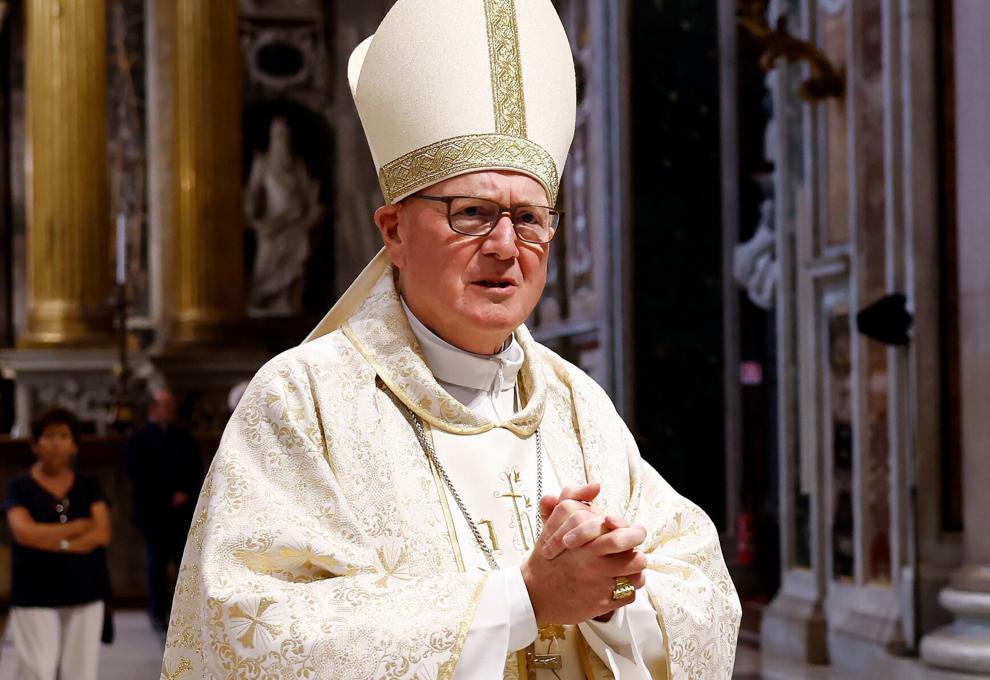
Pope Leo has appointed Bishop Ronald Hicks as the new Archbishop of New York, signaling the Catholic Church’s intention to take a more outspoken and proactive stance on immigration issues. Hicks, 58, has extensive experience in Latin America, having worked in El Salvador and Mexico to support orphaned and abandoned children, giving him firsthand insight into countries from which millions have emigrated to the United States. His appointment comes as the Trump administration has increased anti-immigration policies, which the US Catholic Church has criticized more vocally.
Hicks succeeds Cardinal Timothy Dolan, who resigned upon reaching the mandatory retirement age of 75. Dolan’s tenure was marked by his national prominence and a warmer relationship with President Donald Trump compared to the Vatican, though he faced criticism for his handling of clerical sexual abuse and controversial statements. The appointment of Hicks, a fellow Chicagoan like Pope Leo, reflects a shared background and understanding of immigrant communities and the growing influence of Hispanic Catholics in the US.
Hicks has publicly expressed solidarity with migrants, supporting statements by US bishops opposing mass deportations and highlighting concern for human dignity and fairness in immigration policies. Described as a pastoral moderate, Hicks has also opposed barring political figures like Joe Biden from communion due to their support for legal abortion, showing his ability to bridge ideological divides within the church.
Catholic commentator Michael Sean Winters praised Hicks as a “good listener and bridge builder” who aligns with Pope Leo’s priorities without engaging in culture wars. Elise Allen, a biographer of Pope Leo, noted that Hicks is slightly to the left of Dolan but is not a hardline progressive. The Vatican likely supported his appointment through Cardinal Blase Cupich, a close ally of Pope Leo and advocate for migrant rights.
Hicks’ new role comes amid broader church challenges, including ongoing responses to the clerical sexual abuse scandal. The archdiocese has created a $300 million fund to settle with approximately 1,300 survivors and plans property sales to support the settlements. Hicks has emphasized the need to confront wrongdoing directly and maintain accountability while continuing the church’s social mission.
Observers note that Hicks’ background in Chicago’s socially active Catholic community equips him to address issues of economic injustice, support for unions, and advocacy for marginalized groups. His personal connection to Pope Leo, growing up near each other and sharing similar life experiences, further strengthens his alignment with the pope’s vision.
This appointment positions Hicks at the intersection of religion, politics, and social justice, navigating the challenges of a turbulent US political landscape while advocating for migrants and promoting the church’s social teachings. His leadership in New York is expected to reflect Pope Leo’s priorities, combining pastoral care with principled advocacy on immigration and human rights.