
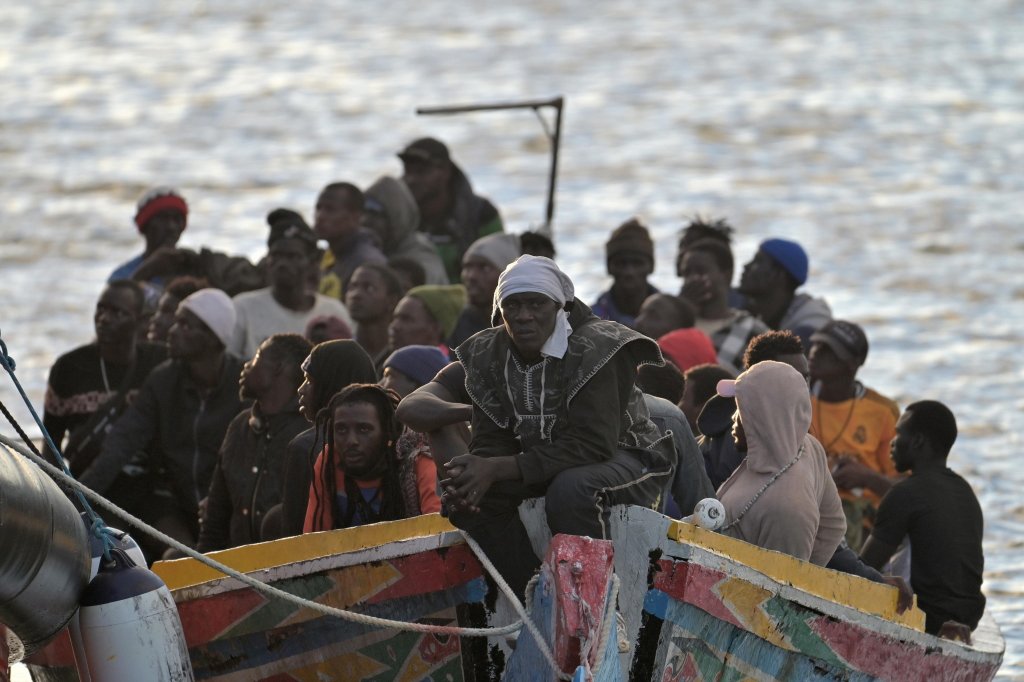
Spain’s Interior Ministry has reported that migrant arrivals increased in November 2025, but the overall number of undocumented migrants entering the country this year remains almost 30 percent lower than the same period in 2024. According to the new figures released on December 2, Spain recorded a total of 34,251 undocumented migrants between January and November 30.
The report shows that November saw a noticeable rise compared to the previous months. However, when the data is compared with last year’s record, Spain experienced a 29.9 percent decrease in arrivals. Officials say this reduction reflects stronger border control measures and changing migration routes across the Mediterranean.
Most migrants reached Spain by sea through dangerous journeys in fragile boats. A total of 30,692 migrants arrived through these sea routes in 2025, and authorities counted 1,154 boats, which represents a 29.2 percent drop from the number registered in 2024. Many of these boats arrived in very poor condition, making the trips extremely risky.
One of the biggest changes this year was the drop in arrivals to the Canary Islands, which saw a 59.4 percent decrease in the first eleven months of 2025. This meant about 24,619 fewer people reaching the islands compared to last year. Yet, November showed a slight rise again, with 2,708 migrants arriving, marking the highest number since January.
The Balearic Islands route also changed throughout the year. Arrivals dropped from 453 in October to 408 in November, but the full-year total still increased by 28.3 percent compared with 2024, especially due to high numbers during the summer months.
Spain also saw fewer disembarkation operations overall. In October, authorities carried out 740 operations, while in November recorded 574. This contributes to a total decline of 8.7 percent since the beginning of the year compared with 2024.
Land arrivals into the Spanish enclaves of Ceuta and Melilla increased sharply. Ceuta registered 274 arrivals, a 39.4 percent increase, while Melilla recorded 291 arrivals, representing a very large 219.8 percent rise compared with the same period last year. These two territories often see land crossings from migrants coming through northern Africa.
According to the Spanish Commission for Refugee Aid (CEAR), between 70 and 80 percent of migrants who arrive by sea immediately request asylum. Many are fleeing war, persecution, or serious human rights violations in their home countries. Data from the UN Refugee Agency (UNHCR) also highlights the human cost of these journeys, with at least 400 deaths along the Canary Islands route and 216 deaths on the route toward mainland Spain and the Balearic Islands in 2025.