
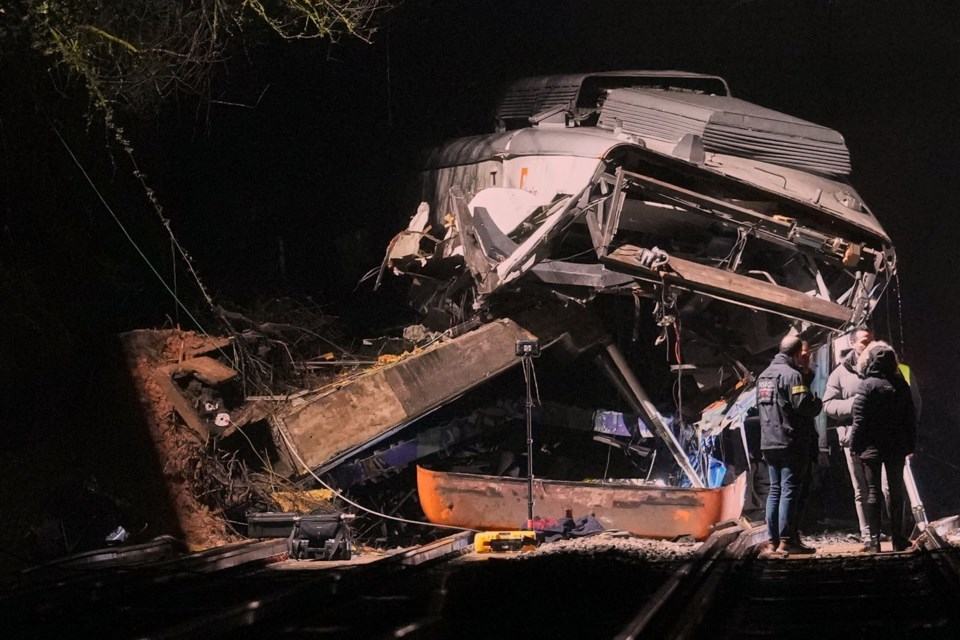
A tragic train collision in southern Spain has left the country in shock after at least 43 people lost their lives in one of the deadliest rail disasters in more than ten years. The accident has raised serious concerns about the safety of Spain’s railway system and has led to calls for urgent investigations and improvements across the network.
The crash happened on Sunday near the town of Adamuz in Cordoba province. According to Spain’s rail infrastructure operator ADIF, the rear part of a high-speed train traveling from Malaga to Madrid derailed and collided with another train coming from Madrid toward Huelva. The impact was severe, and authorities said some victims were found hundreds of metres away from the crash site, showing how powerful the collision was.
Emergency teams have been working around the clock to search the wreckage and support survivors. By Wednesday, officials confirmed a 43rd victim had been found. Dozens of passengers were rushed to hospitals, with at least 37 people still receiving treatment, while many others were treated and later discharged. Spain’s government declared three days of national mourning as families across the country grieve the sudden loss of loved ones.
The deadly crash came just days before more rail incidents were reported in other parts of Spain. In Gelida, near Barcelona, a commuter train crashed after a retaining wall fell onto the tracks, killing the driver and injuring dozens of passengers. On the same day, another train on Barcelona’s regional network derailed after a rock fell on the line, though no injuries were reported in that case. These back-to-back events have increased public fear about railway safety.
Spain’s train drivers’ union, SEMAF, has strongly criticized the condition of railway infrastructure. The union described the situation as a “constant deterioration” and said it would demand criminal responsibility from those in charge of rail safety. Union leaders also announced plans for a strike, saying many drivers are emotionally distressed after losing colleagues in recent incidents.
Transport Minister Oscar Puente said the government is ready to meet with union representatives to prevent the strike and address their concerns. He admitted that train drivers are going through a difficult emotional period but stressed that authorities are taking the situation seriously. Investigations are ongoing to find out the exact cause of the Cordoba crash and whether infrastructure problems played a role.
In response to the accidents, rail services in parts of Catalonia were suspended for safety checks. ADIF also introduced temporary speed limits on some high-speed routes, including sections of the busy Madrid to Barcelona line, after drivers reported unusual bumps during journeys. Speed restrictions were also placed on part of the Madrid to Valencia route as a precaution.
Opposition politicians and regular commuters have also demanded answers. The leader of the Popular Party, Alberto Nunez Feijoo, called for an immediate explanation about the state of the country’s railways. Many passengers say they have noticed changes in train movement recently, with some describing trains as shaking more than usual. As investigations continue, Spain now faces growing pressure to restore public trust and ensure that its rail network is truly safe for the millions who depend on it every year.